Train Collision Outside Jakarta Kills Four, Injures Dozens
Rescue operations continue at Bekasi Timur Station after long-distance service strikes commuter train.
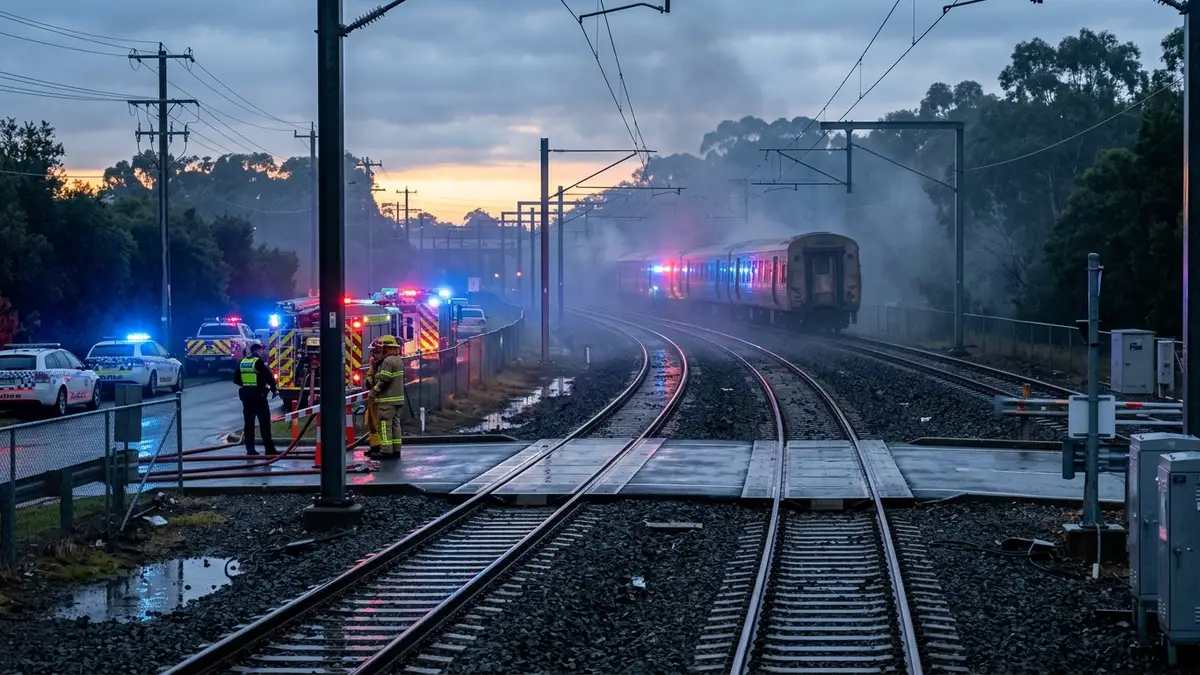
Image: Matt Weston / AI

Callum Smith
A train collision at a station outside Indonesia's capital claimed at least four lives and left 38 others injured.
The Argo Bromo Anggrek, a long-distance train, crashed into the rear carriage of a commuter train at Bekasi Timur Station.
Rescue teams now work to free passengers still trapped within the wreckage.
Jakarta Police Chief Asep Edi Suheri confirmed the evacuation of 29 victims to three nearby hospitals.
Six or seven individuals remained trapped inside the mangled carriages.
Chief Suheri also stated that six or seven individuals remained trapped inside the mangled carriages, intensifying the rescue operation.
Authorities anticipate a significant increase in the death toll as rescuers work to extricate those still caught in the debris.
Sufmi Dasco Ahmad, Deputy Speaker of the Indonesian House of Representatives, indicated a potential rise in fatalities.
Eyewitnesses at the scene described seeing 'many victims' suffering injuries in the immediate aftermath of the crash.
This incident places Indonesia's railway network under renewed scrutiny over safety standards and infrastructure maintenance.
The nation's rail system, a vital artery for millions, developed from the Dutch colonial era in the mid-19th century.
Early lines, such as the one connecting Semarang to Tanggung, opened in 1867, laying the groundwork for the extensive network seen today.
However, rapid expansion and deferred maintenance have periodically led to significant incidents, pressuring state-owned operator PT Kereta Api Indonesia (KAI).
Stakeholders across the political spectrum now demand immediate action, with public safety advocates calling for comprehensive audits of all operational lines.
The economic impact extends beyond immediate rescue costs, affecting commuter confidence and potentially disrupting supply chains reliant on rail transport.
Businesses in Jakarta and surrounding areas depend heavily on the efficient movement of goods and workers facilitated by these crucial train services.
The collision will likely intensify calls for substantial investment in modern signaling systems and track upgrades.
The government faces increasing pressure to implement stricter regulatory oversight and accelerate infrastructure improvements to prevent future tragedies.
This event highlights ongoing challenges in balancing an aging infrastructure with the demands of a rapidly growing population.
The long-term implications could reshape public policy on transportation funding and urban planning in Indonesia's most densely populated regions.