US Submarine Sinks Iranian Warship Iris Dena Off Sri Lankan Coast
Defense Secretary Pete Hegseth confirms the first torpedo sinking of an enemy vessel since World War Two as casualty counts rise.
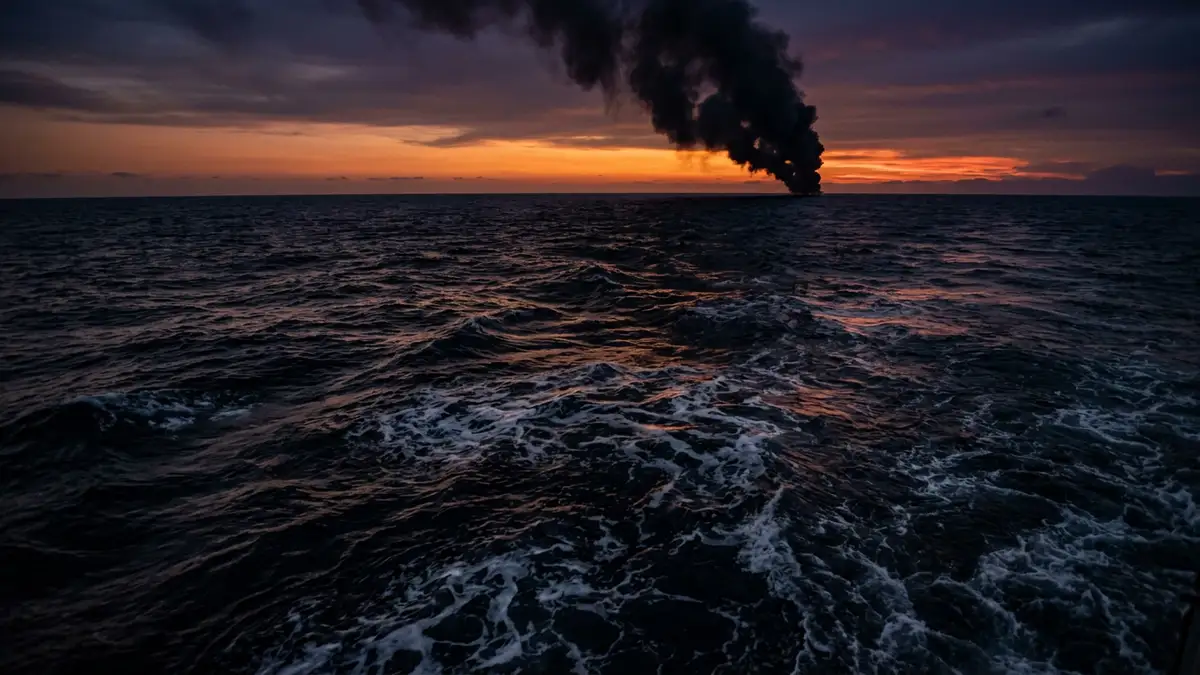
Image: Matt Weston / AI

Carla Rooney
A United States submarine struck and sank the Iranian frigate Iris Dena in the Indian Ocean, marking a violent escalation in sub-surface naval warfare.
The Iris Dena carried approximately 180 personnel at the moment the torpedoes impacted the hull. Sri Lankan navy and defense ministry officials confirm 101 people remain missing in the churning aftermath of the sinking.
Rescuers pulled 80 bodies from the wreckage and rescued 32 survivors from the sea. A Sri Lankan defense source confirmed the vessel succumbed to two heavyweight torpedoes that tore through the frigate's steel structure.
Navy spokesman Budhika Sampath verified that a submarine conducted the underwater assault. An official from the Iranian embassy in Colombo stated that electromagnetic interference disabled the ship’s defense and counterattack capabilities prior to the strike.
This engagement marks the first time a US submarine has sunk an enemy ship with a torpedo since the Second World War.
Pete Hegseth noted that this engagement marks the first time a US submarine has sunk an enemy ship with a torpedo since the Second World War. He explicitly linked the military action to Iranian attempts to assassinate President Trump.
The destruction of the Iris Dena follows a relentless pattern of naval attrition across the region. US Central Command (Centcom) reports the destruction of 17 Iranian vessels to date, including the navy's most operational submarine.
Among the high-value targets lost is the IRIS Shahid Bagheri, a state-of-the-art drone carrier. The US military maintains a stated objective to systematically dismantle the entire navy of the Islamic Republic.
This naval escalation sits within a broader historical context of US-Iranian maritime confrontation. The Iris Dena represented a significant component of Iran's domestic shipbuilding program launched in the early 2000s.
Beyond the waves, political pressure mounts as the US and Israel continue a coordinated campaign of air strikes across Iranian territory. Satellite imagery reveals extensive damage at Iranian naval bases, missile facilities, and nuclear sites.
The humanitarian cost of the conflict has expanded rapidly beyond the maritime theater. The Human Rights Activists News Agency (HRANA) reports 1,097 civilian deaths since Saturday.
Iranian officials reported that a specific air strike on a school in Minab, southern Iran, killed at least 160 people. Children were among the casualties listed in the grim tally provided by local authorities.
Sri Lanka has maintained a position of strict neutrality despite the combat occurring near its territorial waters. Local authorities have focused their resources on search and rescue operations rather than military intervention.
Economic stakeholders monitor the safety of Indian Ocean shipping lanes as the US targets Iranian assets. The loss of 17 vessels represents a significant degradation of Iran's ability to project power in these vital corridors.
US intelligence indicates a shift in the Iranian political landscape following these successive military setbacks. Mojtaba Khamenei has emerged as a frontrunner to succeed his late father as the supreme leader of Iran.
The sinking of the Iris Dena signals a definitive shift toward high-intensity sub-surface warfare. This move transitions the conflict from air-based strikes to direct naval engagement using heavyweight torpedoes.
As the wreckage of the Moudge-class frigate settles on the seabed, the strategic landscape of the Indian Ocean undergoes a violent reconfiguration. The precision of the strike leaves little doubt regarding the current capabilities of the US submarine fleet.