Tanker Explosion Off Kuwait Coast Triggers Oil Leak
A fleeing craft and projectile debris point to a deliberate strike in the world's most critical energy corridor.
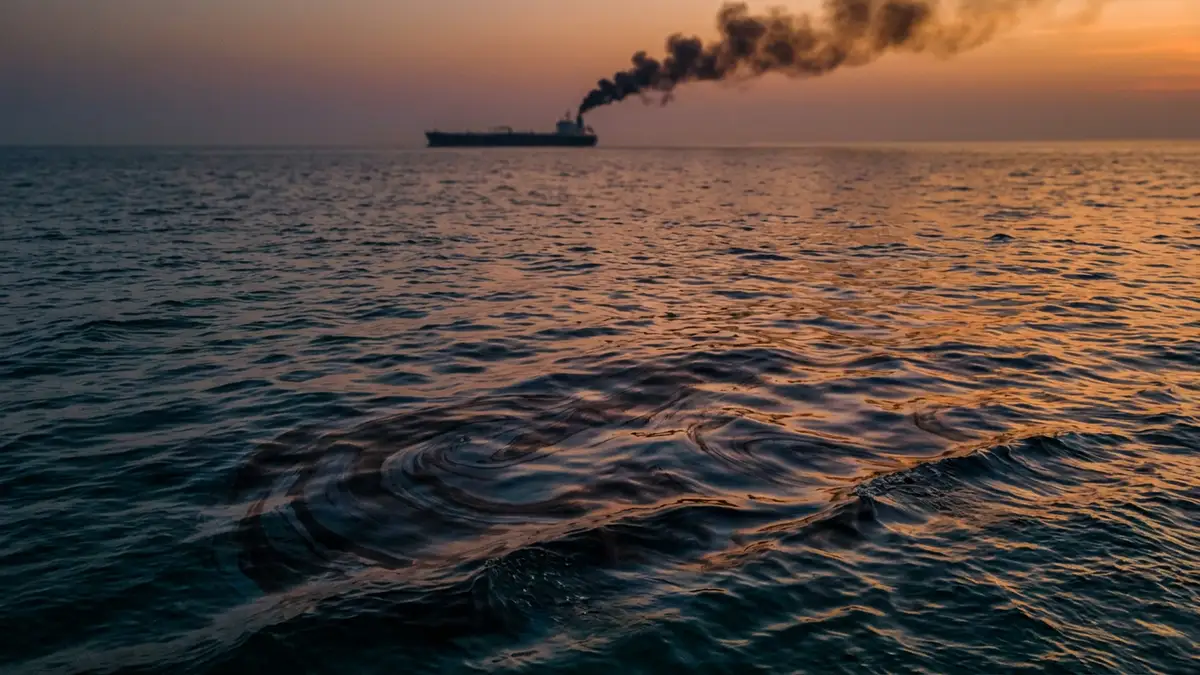
Image: Matt Weston / AI

Sarah Connor
A tanker explosion off the coast of Kuwait has triggered a significant oil leak and a high-stakes maritime investigation after a projectile struck the vessel at anchor.
The Master of the vessel confirmed the blast rocked the ship while it sat stationary. He reported the detonation was both heard and witnessed directly from the bridge.
Immediately following the impact, a small craft accelerated away from the vicinity at high speed. The vessel's wake cut a sharp line through the water as it vanished from visual range.
The explosion struck the hull with enough force to resonate through the entire steel structure.
Crew members inspecting the impact site discovered jagged debris from an unknown projectile scattered across the deck. This physical evidence points to a deliberate kinetic strike rather than an internal mechanical failure.
Thick oil now gushes into the Gulf waters from a ruptured cargo tank near the waterline. This leak creates an immediate environmental crisis for the region's fragile marine ecosystems and local desalination plants.
The Master reported that the explosion struck the hull with enough force to resonate through the entire steel structure. Damage remains concentrated on the port side where the projectile made contact with the vessel.
Iranian state television stated that an oil tanker plunges toward the seabed after a strike in the Strait of Hormuz. This waterway serves as the primary artery for global energy, handling approximately 20 percent of the world's petroleum consumption.
The history of these waters anchors back to the 'Tanker War' of the 1980s. During that conflict, over 500 ships faced attacks as Iran and Iraq targeted commercial shipping to disrupt economic stability.
Current maritime security protocols rely on the United Kingdom Maritime Trade Operations (UKMTO) to coordinate responses to such kinetic events. This latest strike follows a pattern of increased activity involving commercial vessels in these contested waters.
Political stakeholders in Kuwait and neighbouring Gulf states face mounting pressure to secure these vital shipping lanes. Economic analysts monitor the Strait of Hormuz closely, where a total blockage disrupts the transit of 21 million barrels of oil per day.
Beyond the immediate spill, the presence of gushing oil necessitates a rapid response from environmental agencies. These facilities provide the primary water source for millions of residents in the arid coastal region.
Security forces currently investigate the origin of the projectile debris found on the deck. Investigators cross-reference the physical fragments with known regional munitions to identify the source.
The departure of the small craft from the scene provides a specific lead for maritime investigators. Radar data and visual accounts track the movement of the unidentified vessel away from the damaged tanker.
Regional industry shifts have already driven insurance premiums for Gulf transit significantly higher following previous maritime incidents. This explosion adds further volatility to the cost of shipping energy through the Middle East.
The tanker remains at its position while crews assess the structural integrity of the hull. Emergency containment booms deploy to mitigate the spread of the leaking oil as the cargo tank continues to discharge.
Technical teams on-site currently assess the total volume of the spill. Meanwhile, the Strait of Hormuz remains a focal point for international naval patrols tasked with maintaining the freedom of navigation.
The Master confirmed the sequence of events began with the loud blast followed immediately by the sighting of the fleeing craft. The incident places the global energy supply chain under immediate physical threat.