Burnham Reshapes Cabinet: Healey Takes Treasury, Miliband Foreign Office Amid Starmer Loyalist Purge
New Prime Minister installs fresh economic and diplomatic leadership, removing key figures from the previous administration.
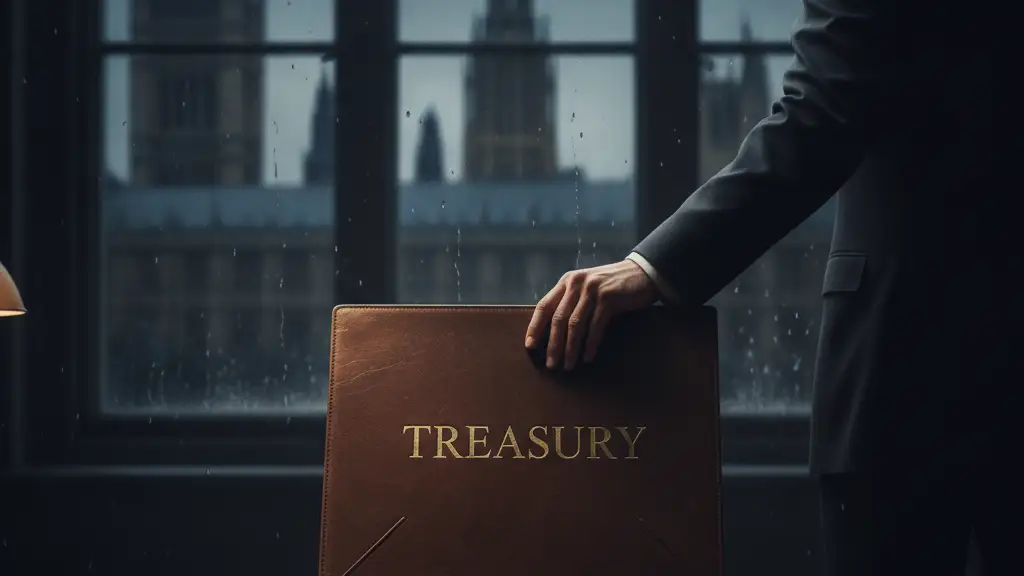
Image: Eddie Pollard / AI

Sarah Connor
Andy Burnham has dramatically reshaped his Cabinet, installing John Healey as Chancellor and Ed Miliband as Foreign Secretary, signaling a decisive break from his predecessor's team.
John Healey's appointment surprised Westminster, replacing Rachel Reeves, who previously became the first female Chancellor.
Beyond the economic sphere, Ed Miliband steps into the Foreign Secretary position, taking charge of the nation's international relations amid heightened global tensions.
NATO issued a warning, suggesting the UK and its allies could face war with Russia within five years; Miliband now directs diplomatic responsibilities.
Shabana Mahmood retains her post as Home Secretary, continuing her work on the controversial asylum system.
Ms. Mahmood remained Home Secretary, overseeing significant policy changes, despite earlier speculation about her chancellorship.
Louise Haigh now holds three key positions: First Secretary of State, Chancellor of the Duchy of Lancaster, and Minister for the Cabinet Office, consolidating power.
The reshuffle removed David Lammy, Rachel Reeves, and Steve Reed from the Cabinet, marking a clear purge of loyalists to former Prime Minister Sir Keir Starmer.
This strategic shift follows Sir Keir Starmer formally ending his 23 months as prime minister, paving the way for Burnham's new administration.
Rachel Reeves turned down an offer from Mr. Burnham for another senior role in Government; her allies declined to specify the alternative job.
Keir Starmer showed loyalty to me by appointing me to his Cabinet. I make no apology for returning that loyalty. It’s what is expected of functioning teams, and I hope those who did not show loyalty to Keir will now show it to you.
Steve Reed expressed disappointment at leaving Government, stating, "Keir Starmer showed loyalty to me by appointing me to his Cabinet. I make no apology for returning that loyalty. It’s what is expected of functioning teams, and I hope those who did not show loyalty to Keir will now show it to you."
David Lammy, the Tottenham MP, commented on his departure, saying he "would have been proud to continue serving in Cabinet. But a new Prime Minister is entitled to build his own team."
Further departures include Peter Kyle, Liz Kendall, and Lord Hermer from the Government, alongside Jo Stevens losing her position as Secretary of State for Wales.
Darren Jones will not be part of the new cabinet, and Lord James Timpson resigned as Prisons minister, adding to the extensive changes.
Hilary Benn also left his position as Northern Ireland Secretary, and Olly Robbins was sacked as foreign secretary, completing a sweeping overhaul.
Healey's return to government in the most vital job in cabinet after the prime minister surprised many, given his name had not been mentioned as a frontrunner.
Born in Wakefield in 1960, Healey attended Lady Lumley's Comprehensive School and Peter's School, York, before studying social and political science at Christ's College, Cambridge.
Before entering politics, Healey worked as a journalist, editing Parliament's in-house magazine, The House; he also served as a disability rights campaigner and trade union official.
His assessment of the government's defence investment plan hastened Sir Keir's departure from Downing Street, a critical historical context for this reshuffle.
Healey made several trips to Ukraine to meet President Zelensky and drove a £9bn spending plan for housing for armed forces families.
The new administration faces immediate public pressure; Labour lost 1,496 councillors across England and control of 38 councils in recent local elections.
This public and political pressure led the government to make a U-turn on proposals to cut disability benefits in July 2025 and water down changes to the Winter Fuel Payment in winter 2024.
Andy Burnham won the Makerfield by-election, a victory many in Labour saw as proof of his ability to beat Reform in a way Sir Keir could not, solidifying his mandate.
This victory followed the Green Party winning the Gorton and Denton by-election, a seat previously held by Labour, after the National Executive Committee (NEC) voted to block Andy Burnham from standing.
huge amount of anxiety and anger
A group of 50 unidentified Labour MPs wrote to Sir Keir, urging the NEC to reconsider blocking Andy Burnham, stating it caused "huge amount of anxiety and anger" and increased the chance of the government losing the seat to Reform."
Morgan McSweeney, Sir Keir's chief of staff, resigned on February 8, stating the decision to appoint Peter Mandelson as US ambassador in December 2024 was wrong and had damaged the party, the country, and trust in politics itself.