Burnham Takes Helm at No. 10 as Starmer Steps Down
Labour's new leader secures overwhelming MP backing, signalling a sharp policy pivot and immediate challenges.

Sarah Connor
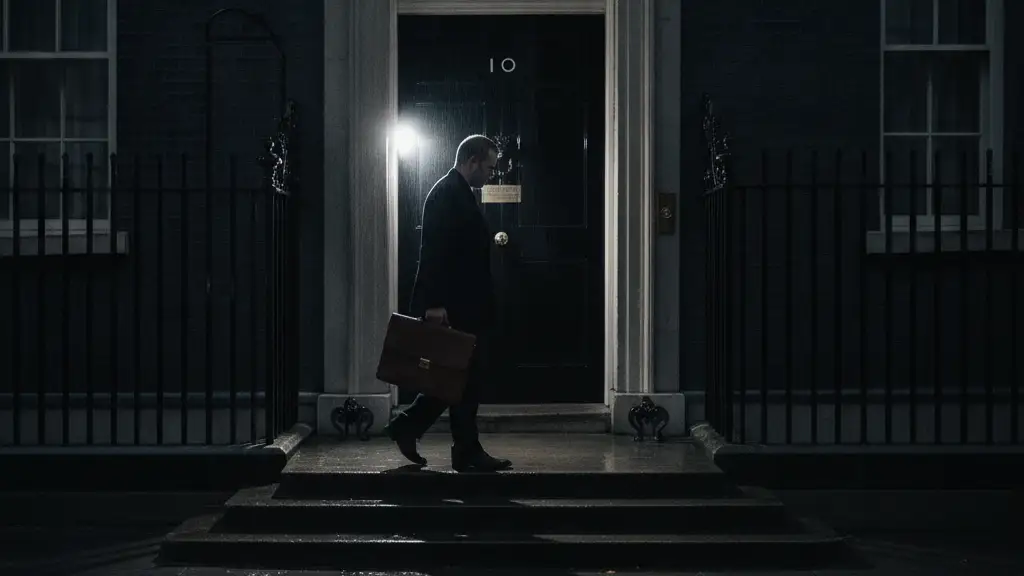
Andy Burnham prepares to enter No. 10 Downing Street, following Sir Keir Starmer's resignation as Labour leader last month.
Mr. Burnham secured the Labour leadership with 56.2% of the vote, becoming the only eligible candidate after receiving 369 endorsements from MPs.
Sir Keir Starmer visits King Charles on Monday morning to formally hand over power; removal vans appeared outside Downing Street on Friday.
A special conference convenes today, July 17, in London at 12pm, confirming Mr. Burnham's appointment at the Trade Union Congress (TUC) headquarters.
Neil Kinnock, David Blunkett, and Margaret Beckett attended the event, alongside Anas Sarwar, witnessing the historic transition.
Shabana Mahmood, chair of the National Executive Committee (NEC), read out the result; she moves to replace Rachel Reeves as Chancellor.
Mr. Burnham, the former mayor of Greater Manchester, returned to Westminster as Makerfield MP last month.
He delivers two speeches today, with a second address planned behind closed doors to Labour members somewhere in the south east.
Mr. Burnham pledges his government will have the “courage to fix the big things that politics has neglected” and the “conviction to argue for our plans.”
A new path to the one we’ve been on for the last 40 years.
He asserts that Britain took “a series of wrong turns in the 1980s” when “political power was centralised and economic power privatised.”
Making the economy work for people across the UK requires “a new path to the one we’ve been on for the last 40 years,” Mr. Burnham states.
He promises the party under his leadership will be “unashamedly Labour in our priorities and in the decisions we take, putting people and places at the heart of everything we do.”
Mr. Burnham plans to challenge Margaret Thatcher's legacy, pledging to unpick the economic settlement she left behind.
He also vows to increase the minimum wage and introduce a four-day working week, alongside promises to “end the scandal of food banks” and ensure “everyone has access to a decent home.”
Despite these ambitious plans, Mr. Burnham commits to Rachel Reeves’ fiscal rules and manifesto pledges not to raise income tax, VAT, or national insurance.
However, he declined to rule out a wealth tax in a recent interview; close ally Steve Rotheram confirmed a wealth tax is under consideration.
Mr. Rotheram states voters must see what the levy would “achieve” for a particular “sector or area” so it was not seen as punitive.
Beyond economic policy, Mr. Burnham pushes powers to local leaders outside Westminster as part of his devolution agenda, creating a “No 10 North” outpost of Downing Street in Manchester.
This strategic shift follows historical precedent; Harold Wilson was the last Prime Prime Minister to represent a constituency in north-west England, a path Mr. Burnham now follows.
The political landscape presents immediate challenges; Labour has trailed Reform UK in opinion polls for 18 months, with a YouGov survey showing Reform holding a five-point lead.
The party suffered significant losses in local elections on May 7, increasing pressure on Sir Keir Starmer to step down.
Parliament is currently in recess, providing Mr. Burnham until September to lead without immediate parliamentary scrutiny.
Access talks for the transition of power occurred in 70 Whitehall, with the incoming government team reporting no 'nasty surprises' during the process.
Mr. Burnham appointed James Purnell as his chief of staff and drafted Matthew McGregor as his No. 10 director of political strategy.
He has not yet decided on the members of his Cabinet, though Shabana Mahmood moves to become Chancellor.
Energy Secretary Ed Miliband, Home Secretary Shabana Mahmood, and Foreign Secretary Yvette Cooper are rumoured as potential picks for Chancellor.
Meanwhile, Nigel Farage, leader of Reform UK, demanded an immediate general election, stating Mr. Burnham has no mandate to run the country.
Mr. Burnham has never shown concern about immigration or taking the UK out of the ECHR.
Mr. Farage claims taxes will rise under Mr. Burnham, including potential property taxes and an increase in the top rate of tax.
He also asserts Mr. Burnham has never shown concern about immigration or taking the UK out of the ECHR.
A petition calling for a general election upon the resignation or removal of a Prime Minister garnered over 13,000 signatures, but the UK Government does not intend to change current constitutional arrangements.
The Dissolution and Calling of Parliament Act 2022 sets the maximum term of a Parliament at five years, meaning the next national election does not have to be held until 2029.
Sir Keir Starmer insists he would have won a general election in 2029, stating he saved the Labour Party by making it electable again.
Looking ahead, Mr. Burnham announces a range of new policies in the weeks ahead, focusing on the cost of living and giving people “breathing space.”
He pledges to make life “more affordable” and to deliver tangible change as soon as possible, with the devolution process driven from his “No 10 North” in Manchester.