World Cup Final Erupts in Violence After Spain's Victory Over Argentina
Red Card, Punches Mar Conclusion of Contentious Match in New Jersey
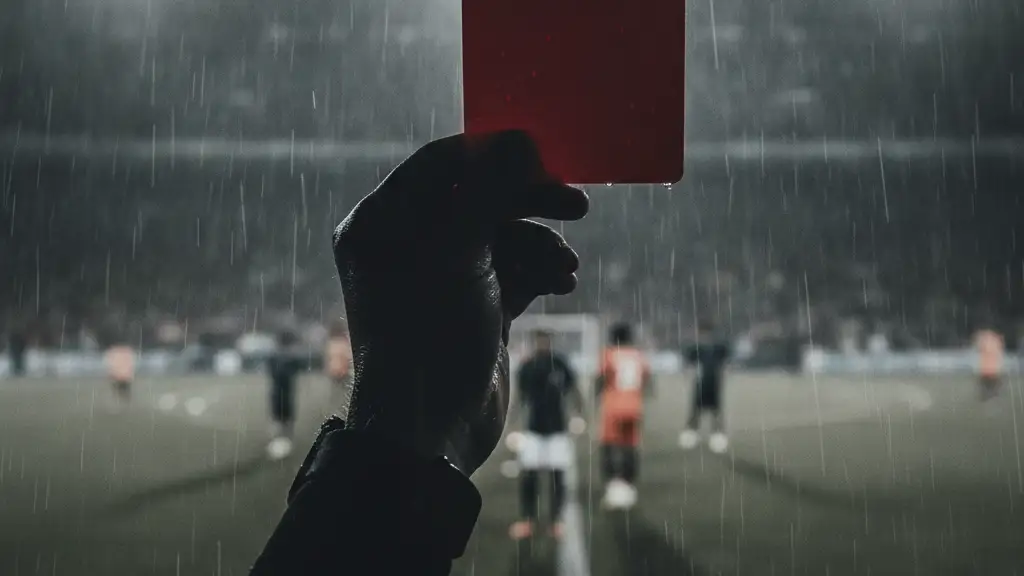
Image: Eddie Pollard / AI

Sarah Connor
The World Cup final between Spain and Argentina descended into violent scenes on the pitch following Spain's hard-fought victory.
Players from both sides clashed immediately after the game concluded.
Ferran Torres secured the winning goal for Spain in extra time, clinching their triumph and setting the stage for the post-match melee.
Aggressive play and a crucial red card incident defined the match's escalating intensity.
Earlier, Enzo Fernández received a red card during regular time for a second bookable offense, leaving Argentina to play with ten men.
At full-time, Leandro Paredes engaged in a physical altercation with Spanish players, igniting the already charged atmosphere.
Punches flew as the match concluded; Nahuel Molina also struck Spanish players.
Leandro Paredes kicked Eric Garcia to the ground, then struck him in the face as Garcia rose to confront him.
Dan Long stated Leandro Paredes kicked Eric Garcia to the ground, then struck him in the face as Garcia rose to confront him.
Long also claimed an Argentina player held back a Spain substitute before Paredes intervened, ripping the substitute's bib and swinging twice, connecting with his face.
An observer noted Leandro Paredes swung at a Spanish substitute, confirming the widespread altercations.
Paredes also exchanged words with Gavi, placing him at the center of the post-match disorder.
Meanwhile, Lionel Scaloni, Argentina's coach, moved to separate players on the pitch, attempting to de-escalate the unfolding events.
Spain's substitutes rushed onto the pitch after their victory, contributing to the crowded and volatile scene.
This incident recalls the infamous 'Battle of Santiago' at the 1962 World Cup, where Chile and Italy players engaged in widespread fighting, resulting in multiple ejections and police intervention.
Such displays of aggression on football's biggest stage damage the sport's image, impacting fan engagement and potentially influencing future hosting bids for major tournaments.
For Argentina, the defeat and subsequent violence add another chapter to their storied, often dramatic, World Cup history, contrasting sharply with their 1986 triumph led by Diego Maradona.
The economic implications for both national federations could include fines from FIFA and potential sponsorship repercussions, as brands distance themselves from unsportsmanlike conduct.
Paredes entered the game only at half-time; an observer noted he was fortunate to remain on the pitch given his conduct.
He was fortunate to remain on the pitch given his conduct.
During his time on the field, Paredes made a number of questionable challenges, preceding the later eruption of violence.