Michelin-Starred Chef Faces Prison Over Ant-Topped Desserts
Evett owner Joseph Lidgerwood prosecuted for food sanitation violations involving unapproved insect ingredients.
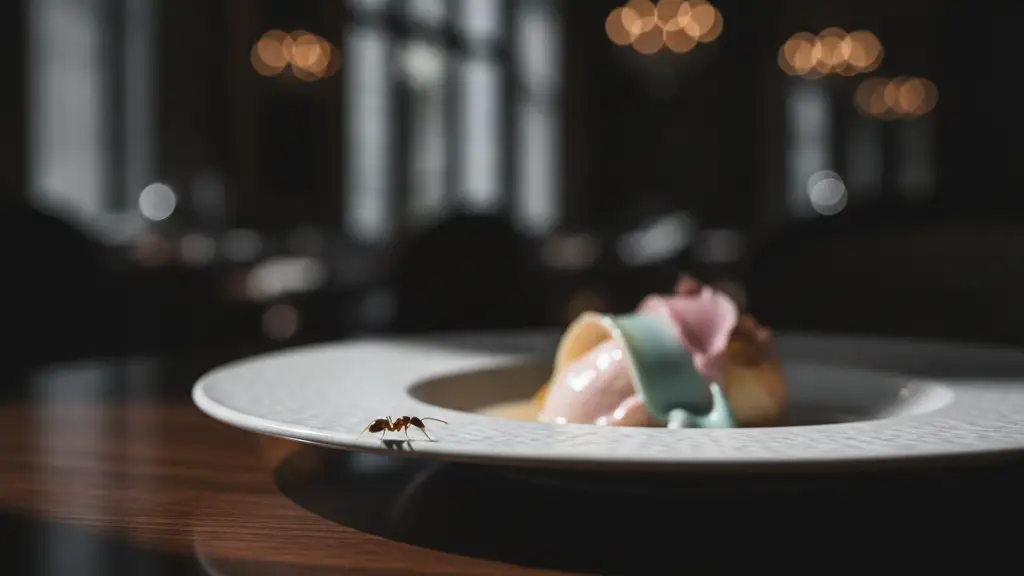
Image: Eddie Pollard / AI

Callum Smith
A Michelin-starred chef in South Korea faces a one-year prison sentence request from prosecutors for serving desserts garnished with ants.
South Korean law explicitly prohibits ants among the ten insect species approved for food ingredients; authorities consider safety and contamination levels as primary criteria for insect approval, reflecting a developing regulatory framework for edible insects.
Chef Joseph Lidgerwood admitted to using dried ants as a sorbet topping, a practice he claims was common in his previous culinary roles, while prosecutors also sought a 20 million won (£10,108) fine for Evett's operating company, emphasizing the financial penalties for such breaches.
The Ministry of Food and Drug Safety initiated the investigation after officials discovered online reviews featuring photographs of ant-garnished dishes, prompting a swift inquiry into the restaurant's practices.
The maximum penalty for such an offense under South Korean law reaches five years in prison and a 50 million won fine, underscoring the severe nature of the charges.
The restaurant could have served up to 12,200 portions of ant sorbet over four years, potentially incorporating around 49,000 ants, asserting the eatery generated 120 million won (£61,000) in revenue from the dessert, indicating a substantial commercial benefit.
Prosecutors calculated the restaurant could have served up to 12,200 portions of ant sorbet over four years, potentially incorporating around 49,000 ants, asserting the eatery generated 120 million won (£61,000) in revenue from the dessert, indicating a substantial commercial benefit.
Health authorities in South Korea cautioned that the ants used contained up to 55 times more heavy metals than other insects, raising significant public health concerns and further contributing to the alleged violation of food sanitation provisions.
The restaurant's defense countered the prosecution’s estimate of ants used, stating only about 60% of customers accepted the ant topping when offered, which challenges the scale of the alleged infraction.
Lidgerwood claimed he used 'ant acidity in dishes while working in the US and Europe,' unaware of its illegality in Korea, citing a lack of familiarity with local regulations and suggesting a cultural difference in culinary norms.
The chef stated the practice was well-known in previous restaurants where he worked across Europe and the US, highlighting a divergence in international culinary standards.
The restaurant owner maintained diners received information about opting for non-ant toppings, with alternatives like fermented vinegar and edible flowers available, providing a choice to patrons.
Restaurants in other countries, including Australia, Denmark, and the UK, utilize ants as ingredients, pointing to a global culinary trend that diverges sharply from South Korean law.
He also noted that restaurants in other countries, including Australia, Denmark, and the UK, utilize ants as ingredients, pointing to a global culinary trend that diverges sharply from South Korean law.
The prosecution asserts the restaurant imported dried ants from the United States and Thailand over the past five years, using nearly 50,000 insects in total; this case highlights a growing tension between innovative culinary practices and stringent national food safety regulations.
South Korea has actively developed its regulatory framework for edible insects, making this incident a critical test case, as the broader landscape of food innovation frequently pushes boundaries, but this incident underscores the critical importance of adhering to local legal frameworks.
Adherence becomes particularly crucial concerning public health; the Australian government has not issued an official response regarding the charges against Joseph Lidgerwood.
However, Australia has previously expressed strong concerns over charges against its citizens abroad, such as in the 2013 methanol poisoning deaths of two Australian teenagers in Laos, demonstrating a history of diplomatic engagement in such matters.
The defense emphasized that very few dishes on the 15-course menu included the option of ants, suggesting the ingredient constituted a minor component of the overall dining experience.
The September 2 sentencing will set a precedent for how South Korean law addresses the intersection of international culinary trends and domestic food safety standards, with the outcome resonating across the global gastronomic landscape.