Fatal Train Collision Near Bedford Claims Driver, Injures Dozens
Two **East Midlands Railway** services collide south of **Elstow interchange**, prompting a massive emergency response and network disruption.

Sarah Connor
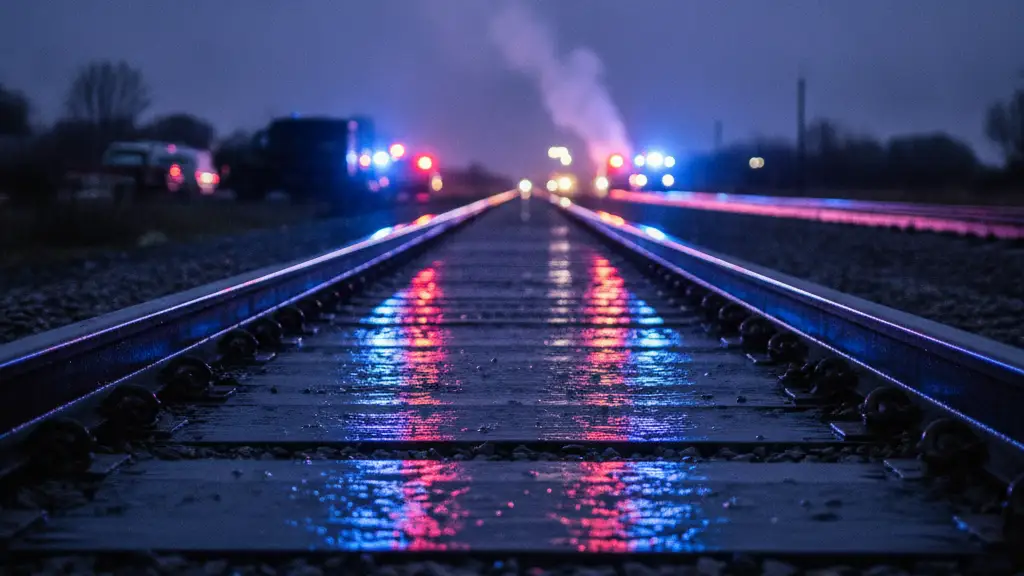
A train driver died and 33 individuals sustained serious injuries after two East Midlands Railway (EMR) services collided near Bedford on Friday, June 19.
The 4:40 PM departure from Corby and the 3:50 PM departure from Nottingham, both services operating towards London St Pancras, collided.
A Class 360 train struck the rear of a Class 810 train shortly after 5 PM on Friday afternoon.
The collision occurred just south of the Elstow interchange, positioned between the A421 and the A6.
Emergency services, including multiple air ambulance helicopters, rapidly converged on the scene, managing the immediate aftermath.
The collision halted all East Midlands Railway services to and from London St Pancras.
No services will operate between St Pancras station and Bedford until at least Monday; planned engineering works also affect the route's closure.
Passenger Brett Byatt described visible injuries within his carriage, stating 90 percent of the occupants sustained serious harm.
90 percent of the occupants sustained serious harm.
Byatt observed a woman with a snapped leg and noted first-class passengers suffered stomach and rib injuries from colliding with tables.
He also claimed seats broke backward into passengers behind them, intensifying the impact for those seated behind.
Another passenger, Dr. Knapp, reported blood on his trousers and experienced back pain, though he affirmed he was otherwise alright.
Dr. Knapp relayed that other passengers told him they had not felt the train slow down before the crash, a detail now under scrutiny.
However, Peter Knapp claimed other passengers noticed the train decelerating, presenting conflicting accounts of the moments before impact.
Byatt questioned why his train was not signaled and why the train driver lost his life, citing suspected technical faults and the UK's aging railway network.
Why was my train not signaled? Why did the train driver lose his life?
He asserted signal failures occur frequently on the UK's railway network, raising concerns about systemic issues.
A team of Rail Accident Investigation Branch inspectors now investigates the incident, examining the site and seeking to establish the precise sequence of events.
Ampthill Road has been closed this morning as part of the ongoing investigation, impacting local traffic.
This incident recalls the Great Heck crash of 2001, where a passenger train collided with a derailed freight train, resulting in 10 fatalities and 82 injuries.
The current incident has resulted in one fatality and over 80 injuries, with nine people remaining in critical condition.
At least one carriage derailed in the collision, complicating recovery and investigation efforts.
The prolonged closure of a vital artery into London St Pancras will incur substantial economic costs, impacting both freight and passenger revenues for East Midlands Railway.
Maintaining safety across a complex and aging rail infrastructure requires constant vigilance from policymakers and the public.
Future implications extend to potential revisions in safety protocols and signaling systems, as authorities seek to prevent similar tragedies and enhance network resilience.
Prime Minister Sir Keir Starmer and Health Secretary James Murray have commented on the incident, which caused severe delays across the rail network.