Drought Declared Across UK as Rivers Run Dry, Water Restrictions Expand
Millions face hosepipe bans as record dry conditions grip England and Wales, threatening water supplies and ecosystems.
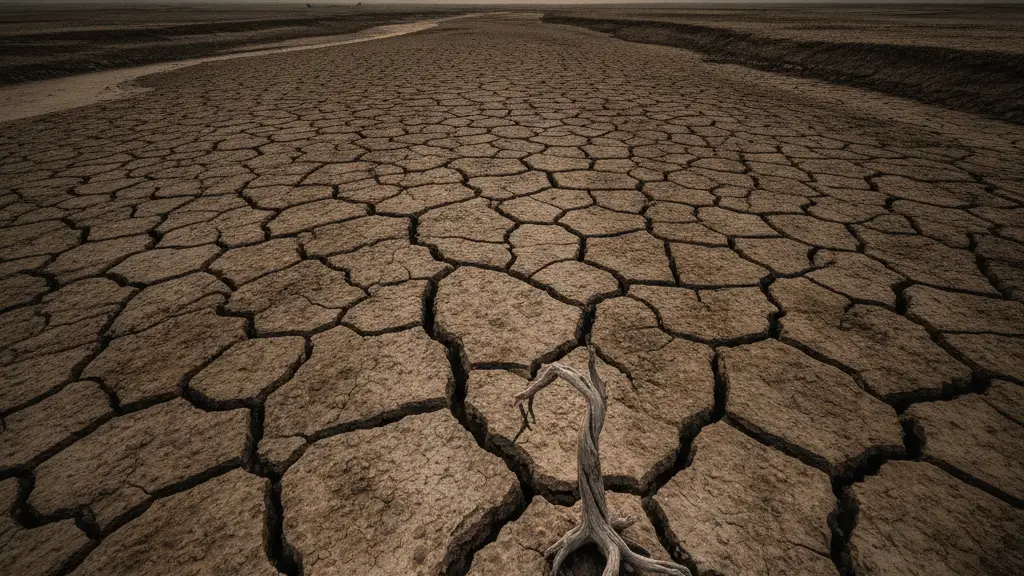
Image: Eddie Pollard / AI

Carla Rooney
Weeks of relentless heat and a severe lack of rainfall have left rivers and reservoirs across the United Kingdom critically dry, prompting official drought declarations and widespread water restrictions.
This declaration follows rigorous assessments by Natural Resources Wales (NRW) and the Environment Agency (EA), based on critical hydrological, meteorological, and ecological data.
July stands poised to become Wales' driest month in nearly 190 years, a historical low that underscores the current conditions' severity.
The two drought-declared areas received less than 2% of their expected rainfall for the month, a stark indicator of the crisis.
Despite some water companies reporting healthy reservoir levels, numerous locations record new monthly minimum river flows, while others rapidly approach record lows.
This mirrors the severe drought conditions of 2018, which also triggered widespread water shortages and restrictions across the region.
Images reveal parched earth at Howden Reservoir and Lockwood Reservoir, with significantly reduced water levels in the River Lea illustrating the widespread impact.
Current 'notably low' levels at reservoirs like Wimbleball, Grafham, and Hanningfield draw comparisons to historical lows during previous dry periods.
The affected areas in Wales include north Gwynedd, Ynys Môn, south Gwynedd, Dee, Clwyd, and the Upper Severn, all facing unprecedented environmental pressure.
Drying riverbeds, isolated pools in smaller rivers, and increased risks to fish and freshwater species now present common sights, threatening delicate ecosystems.
Water companies in North Wales and the Upper Severn implement advanced water reuse strategies in agriculture, including treated wastewater for irrigation, to enhance water availability.
Farmers express mounting concerns over water availability for crops and grazing conditions for livestock, facing dire economic consequences.
The forecast rain is unlikely to be widespread or substantial; many areas, particularly southern England, will continue to experience prevailing dry conditions for the foreseeable future.
These drought declarations follow a period of record dry conditions, multiple heatwaves, and a surge in wildfires across Wales this year, exacerbating an already critical situation.
The two drought-declared areas received less than 2% of their expected rainfall for the month, while much of England, meanwhile, saw just 3% of its average July rainfall.
A yellow 'risk to life' alert remains in force across parts of the UK from July 24 to July 26, highlighting the severe public health implications of the extreme heat.
The UK Health Security Agency (UKHSA) warning indicates potential minor impacts on health and social care services, including increased healthcare use by vulnerable individuals and a greater risk to their lives.
Indoor environments also face the potential to become very warm, and an increase in water-related incidents is anticipated, straining emergency services.
The Met Office forecasts temperatures reaching highs of around 29C over the weekend in London and southeast England, dropping slightly to 25C by Sunday.
Light rain is predicted for Saturday in the north and west of the UK, with fresher conditions and average temperatures expected from Sunday onwards.
However, Greg Wolverson stated the forecast rain is unlikely to be widespread or substantial; many areas, particularly southern England, will continue to experience prevailing dry conditions for the foreseeable future.
Rhian Thomas of Natural Resources Wales (NRW) confirmed drought status does not automatically mean water shortages for customers, but it undeniably reflects the growing pressure placed on the environment.
Drought status does not automatically mean water shortages for customers, but it undeniably reflects the growing pressure placed on the environment.
NRW further stated July is on course to become the driest on record for Wales for almost 190 years, a grim milestone that will stand unless significant rainfall materializes before the month's end.
Human-caused climate change drives these severe conditions, as recent scientific reports from the Met Office highlight rising temperatures and changing precipitation patterns.
These factors contribute to more frequent and intense heatwaves and droughts, underscoring the urgent need for adaptive water management strategies to mitigate future crises.