US Imposes New Tolls, Reinstates Blockade on Strait of Hormuz
Washington demands 20% cargo fee for passage, reversing recent interim agreement with Tehran.

Sarah Connor
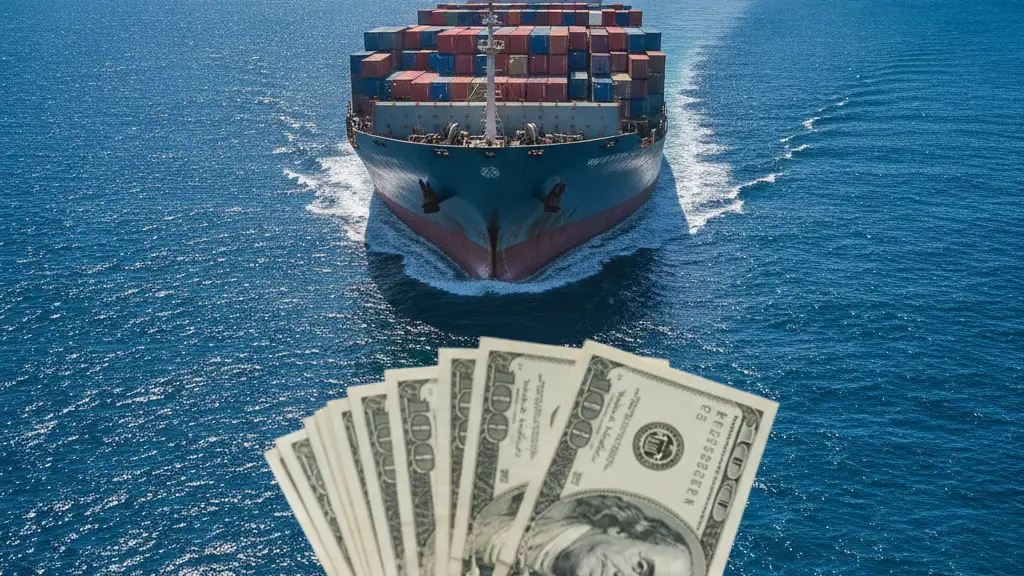
The United States will now charge ships for safe passage through the Strait of Hormuz, reinstating a blockade on Iranian vessels and their customers.
Trump stated on Truth Social that charging a fee on cargo for use of the Gulf channel constituted 'fairness' to cover security costs.
He claimed the USA would assume the role of 'THE GUARDIAN OF THE HORMUZ STRAIT' and receive reimbursement at a rate of 20% on all shipped cargo.
Furthermore, Trump claimed the US was reinstating 'THE IRANIAN BLOCKADE,' stopping only Iran’s ships or customers from entering or leaving.
He added that all other countries would retain fair and open use of the Strait, asserting the Hormuz Strait remained OPEN, with or without Iran.
The International Maritime Organisation stated no legal basis exists for mandatory tolls to transit through a strait, directly challenging the US position.
The right of transit passage without restrictions or tolls forms the bedrock of international trade.
The G7 summit confirmed the right of transit passage without restrictions or tolls forms the bedrock of international trade.
Historically, the Strait of Hormuz, a narrow chokepoint, has seen numerous confrontations over decades; the waterway remained open before the US and Israel launched conflict on February 28.
The US and Iran have exchanged fire amid a stand-off over the Gulf channel, marking a history of direct military encounters.
Control over this maritime artery has driven geopolitical struggle, impacting global oil prices and regional stability for decades.
Meanwhile, the US military deployed one-way “kamikaze” surface drones for the first time in its latest attacks on Iran; three Corsair unmanned surface vessels struck a port at Bandar Abbas Naval Base.
US Central Command (Centcom) claimed last night’s strikes degraded Iran’s ability to continue attacking commercial shipping; US forces continued attacks focused largely on Iranian port cities along the country's coastline.
The conflict has resulted in 14 US military personnel deaths and 414 wounded.
Ebrahim Zolfaghari, spokesperson of Khatam al-Anbiya, claimed repeated adventurism and malicious actions from the US in the strait have 'seriously endangered regional security, international trade and the passage of oil tankers and commercial vessels.'
Beyond the legal debate, Iran’s Revolutionary Guard launched attacks on facilities in Bahrain, Kuwait, Oman, and Jordan; they also fired on commercial ships attempting to transit the strait without permission, seizing two vessels.
Iran claimed it effectively shut down the strait after the US and Israel launched strikes against Iran on February 28; Tehran retaliated by firing missiles and drones on Israel and US military bases in a number of Gulf countries.
Iran’s Revolutionary Guard Corps stated the waterway constitutes 'our territory' and warned it would not allow any country to 'continue its illegal interference in it.'
Cooperation with or logistical support for the US will be considered an act of war against the sovereignty and national security of Iran. If the war expands in the region, the flames of war will engulf all countries in the region.
The IRGC also stated that cooperation with or logistical support for the US 'will be considered an act of war against the sovereignty and national security of Iran'; they warned that if the war expands in the region, 'the flames of war will engulf all countries in the region.'
This strategic shift follows the UK's proscription of the IRGC as a national security threat over 'threats to life and intimidation on UK soil'; the Islamic Movement of the Companions of the Right (IMCR) and the GRU also received proscription.