Ukraine's Military Leadership Overhauled Amid Protests and Strategic Shifts
President Zelenskyy replaces commander-in-chief, sparking nationwide protests and a generational conflict over military modernization.
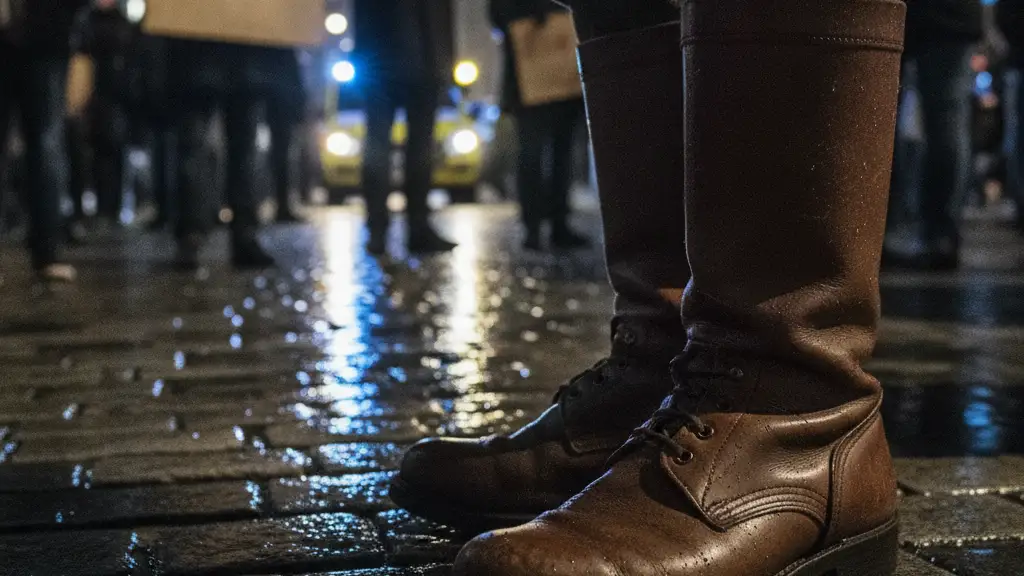
Image: Eddie Pollard / AI

Callum Smith
President Zelenskyy has initiated Ukraine's most significant military shake-up in two years, replacing commander-in-chief Oleksandr Syrskyi with Major General Mykhailo Drapatyi.
Fedorov, dismissed last Thursday in a government reshuffle, rejected a new offer as deputy prime minister for technological development, insisting on his return as defense minister to implement crucial modernization plans.
His vision included overhauling the drone program and reforming military procurement rules to combat entrenched corruption; campaigners have vowed indefinite nationwide protests until Fedorov's reinstatement, citing his pivotal role in modernizing the Ukrainian military.
Fedorov's successful implementation of new contracts and the expansion of Ukraine's domestic drone production provided clear evidence of his impact, but the crisis in Ukraine’s military leadership stemmed from a generational conflict between Fedorov and Syrskyi.
Months of publicly known friction preceded the dismissals, escalating in early 2024, as Fedorov's innovative approach to drone warfare directly clashed with Syrskyi's traditional military strategies.
The disagreement between Syrskyi and Fedorov fundamentally concerned two distinct leadership styles.
A Ukrainian security source indicated the disagreement between Syrskyi and Fedorov fundamentally concerned two distinct leadership styles; Syrskyi, associated with tight control and rigid hierarchy, represented an older guard.
Critics accused Syrskyi, 60, of relying on costly frontal assaults and expending soldiers’ lives too freely, with his principle of 'active defence' at Bakhmut sacrificing perhaps 14,000 Ukrainian lives.
Many Ukrainians disliked Syrskyi, asserting he retained rigid traits from his Soviet-era military training, and they accused him of disregarding casualties, alienating younger officers trained by NATO.
In stark contrast, Fedorov garnered praise for energizing the armed forces and leading a drive against corruption; he represented a decisive break from the Soviet-style command culture.
Fedorov played a key role in Ukraine's successes defending against Russia's invasion, particularly in the defense of Kyiv; now, Mykhailo Drapatyi, 43, heads the country’s armed forces.
President Volodymyr Zelenskyy's decision to dismiss Syrskyi and appoint a younger, tech-focused leader is expected to boost morale within the military; Drapatyi is known for his defiance in 2014.
He refused to surrender and led a successful breakout after his battalion was surrounded in Mariupol, driving an armored infantry fighting vehicle through a separatist barricade; Drapatyi also played a key role in the liberation of Kherson.
He is seen as a leader who embraced drone warfare early, pushing authority down to junior officers; Drapatyi has received instructions to 'intensify offensive operations in all domains,' plan operations behind enemy lines, develop new technologies, and build up the military’s capabilities.
His appointment will likely be welcomed by many protesters, particularly after he publicly backed Fedorov in his dispute with Syrskyi; Drapatyi reportedly enjoys a good relationship with Fedorov, asking for several of his deputies to remain in place.
This shift in leadership reflects a broader societal demand for a more agile and technologically advanced military, moving away from the entrenched Soviet-era doctrines that have long shaped Ukraine's defense establishment.
Such leadership changes, aligning with modern warfare tactics, have resolved past generational conflicts; the public outcry and sustained protests underscore the significant political pressure on Zelenskyy's administration.
This pressure demands alignment of military strategy with public sentiment and modern warfare requirements; Yevhenii Khmara has been appointed acting defence minister, completing the immediate changes in the defense leadership.
Syrskyi, the outgoing commander-in-chief, had stated that Ukraine retook more than 700 sq km of territory this year, and he also created a separate drone branch of the armed forces, having helped organize the defense of Kyiv in February 2022.
Drapatyi could be blamed for problems he cannot fully control within six months.
However, Mykola Bielieskov warns of a risk: Drapatyi could be blamed for problems he cannot fully control within six months; while Zelenskyy claims Fedorov will return to government in a 'prominent position,' it remains unclear if this offer will be accepted.
It also remains uncertain if this will satisfy protesters and calm the streets; Russian war bloggers responded to Fedorov’s dismissal with glee, noting his role in masterminding drone strikes.
Moscow commentators voiced hope that the controversy would fuel political infighting in Ukraine.