UK Confronts "Exceptional" Wildfire Risk Amidst Record Heatwave
Nation records unprecedented 35C days as firefighters battle blazes from South Downs to North Wales.

Sarah Connor
The United Kingdom faces an "exceptional" wildfire risk as a persistent 33C heatwave grips the nation, driving temperatures to unprecedented levels.
This year marks the first time temperatures reached 35C in the UK on six separate days, shattering previous meteorological benchmarks.
Furthermore, 2026 became the first year to record temperatures of 35C or higher across three calendar months, with nine instances of 34C or higher this summer.
The Met Office confirmed new records after temperatures climbed to 35.2C at Coton in the Elms, Derbyshire, on Friday afternoon.
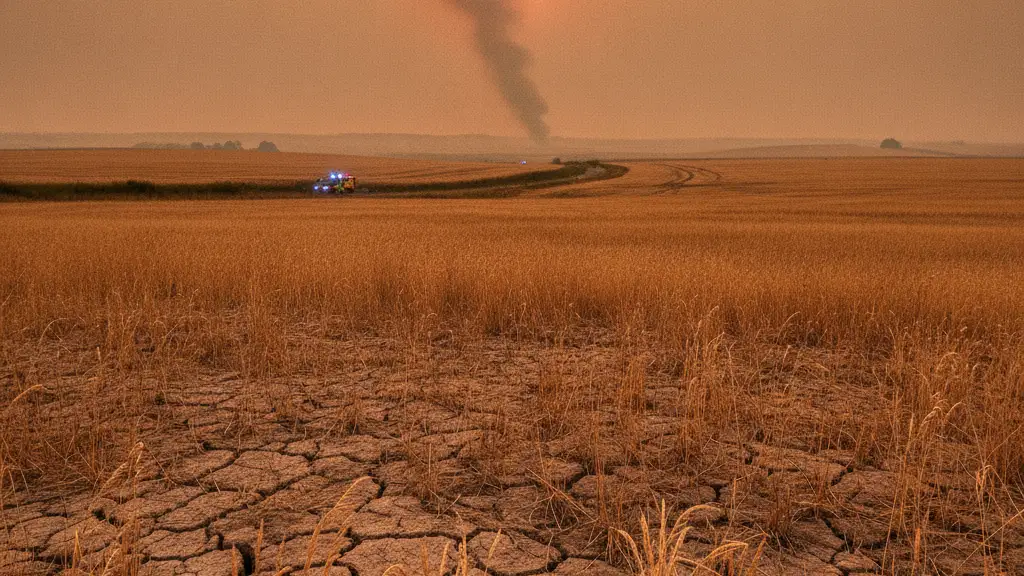
This prolonged heat created conditions ripe for rapid fire spread, pushing parts of the UK into an 'exceptional' risk category for wildfires.
Most wildfires start from a spark, such as a disposable barbecue, discarded cigarette, or glass bottle.
Firefighters battled a significant wildfire at Devil’s Dyke in the South Downs national park on Friday night, demanding extensive resources to contain the blaze.
Meanwhile, in Derbyshire, Derbyshire Fire and Rescue confirmed it actively tackled two separate wildfires in the vicinity of Coton in the Elms on Friday evening.
Eight fire engines attended additional fires near Glossop in Derbyshire on Saturday, working to contain multiple incidents across the region.
A trackside fire involving shrubbery at Stratford Station in London on Friday night forced rail line closures, disrupting transport services.
Several fire services responded to wildfires on open land in recent days, with dry conditions evident across the country.
Beyond the immediate blazes, Natural England states the area of 'exceptional' risk will increase and spread to the South East and east of England by the middle of the week.
Areas in southern England, as well as the Midlands, stand at the highest risk, according to Natural England.
Dave Swallow of the National Fire Chiefs Council (NFCC) states most wildfires start from a spark, such as a disposable barbecue, discarded cigarette, or glass bottle.
The UK Health Security Agency (UKHSA) issued Amber heat health alerts for the West Midlands and the South West, effective from 9am on Sunday, July 12, until 9pm on Wednesday, July 15.
The UK Health Security Agency states similar impacts are possible in these areas, including a potential increase in water-related incidents.
Tragically, three people died in the water in recent days, prompting urgent warnings about water safety during the ongoing heatwave.
Several water companies imposed hosepipe bans across parts of England, conserving vital water resources amidst the dry spell.
This domestic crisis unfolds as Spain grapples with one of its deadliest wildfires on record, claiming twelve lives.
Four Britons are among the dead in Spain's wildfires, with several victims found inside burnt-out vehicles.
The Met Office warned of 'high' or 'very high' UV levels this weekend, advising caution for outdoor activities.
Pollen levels are also expected to be 'high' or 'very high' in some areas, impacting allergy sufferers across the country.
Looking ahead, the Met Office states a possible increase in thunderstorms from Monday in parts of the south.
Thunderstorms are forecast to become more widespread by Thursday, though temperatures will remain in the high 20s and low 30s.
Heatwave conditions are expected to end by the close of the week as a cooler north wind moves across the UK.
Parts of Scotland are expected to experience heavy rain on Sunday as conditions shift away from the heatwave, offering some relief.
However, the Met Office claims parts of Scotland and Northern Ireland could potentially see heatwave conditions returning by midweek.