Iran Responds to US Peace Proposal Amid Sanctions Threat, 'Project Freedom' Launch
Tehran receives Washington's reply as US initiates humanitarian mission in **Strait of Hormuz** and warns of new economic penalties.
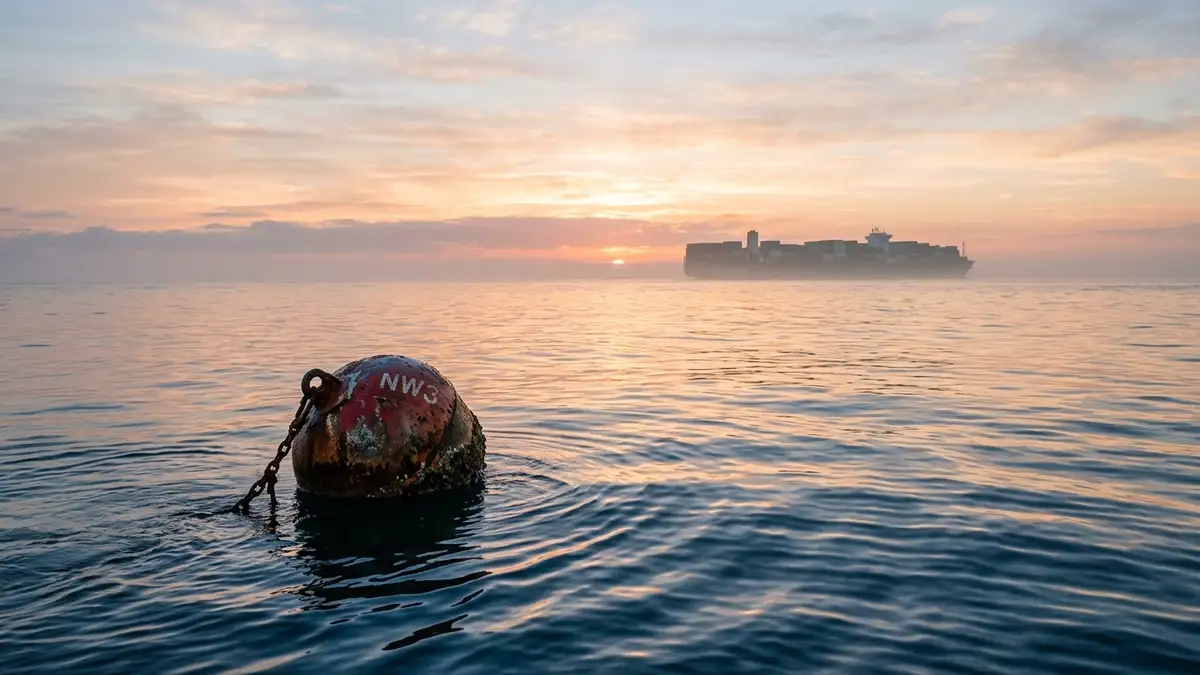
Image: Matt Weston / AI

Callum Smith
Iran has confirmed receipt of the United States' response to its latest peace proposal, a development coinciding with a US warning to shipping companies regarding potential sanctions for payments made to Tehran for passage through the Strait of Hormuz.
The operation commences Monday morning; Trump described it as a humanitarian gesture from the US, Iran, and other Middle Eastern nations.
He stated the US would assist countries with vessels trapped in the waterway, many facing dwindling supplies of food and other necessities, impacting crew health and sanitation.
Trump issued a stern warning: any interference with this process would be 'dealt with forcefully.' Countries worldwide requested US assistance in freeing their ships.
Any interference with this process would be dealt with forcefully.
Beyond the immediate crisis, Iran's 14-point peace plan, delivered to mediators in Pakistan on Thursday night, urged Washington to withdraw its forces from areas near Iran's borders.
The proposal also demanded an end to the naval blockade of Iranian ports, a cessation of all hostilities, including Israel's offensive in Lebanon, and the release of Iran's frozen assets.
It further called for the payment of compensation and the lifting of sanctions. Iranian state media indicated the proposal focused on 'ending the war' rather than merely extending the current ceasefire, in effect since April 8.
The plan outlines a resolution for all outstanding issues within 30 days, a tight timeline for such complex negotiations.
Esmaeil Baghaei confirmed the current discussions are not nuclear negotiations. A Senior Iranian Official echoed this, stating Tehran believed its latest proposal to shelve nuclear talks for a later stage marked a significant shift aimed at facilitating an agreement.
Tehran's strategic move reflects a historical pattern of leveraging regional tensions to gain concessions. This tactic emerged during the 1980-1988 Iran-Iraq War when control over vital shipping lanes became a central point of contention.
Meanwhile, Iran's deputy foreign minister, Kazem Gharibabadi, stated Iran prepared for both diplomatic and confrontational paths, maintaining a dual approach.
Ali Nikzad, Iran’s deputy parliament speaker, asserted that Tehran 'will not back down from our position on the Strait of Hormuz, and it will not return to its pre-war conditions,' claiming the Strait belongs to the Islamic Republic of Iran.
This stance directly challenges international maritime law, which designates the Strait of Hormuz as an international waterway. This principle established itself over centuries of global trade.
Tehran will not back down from our position on the Strait of Hormuz, and it will not return to its pre-war conditions.
Tehran maintains it collected tolls from ships for free navigation through the strait. Hamidreza Haji Bababei, deputy speaker of Iran's Parliament, confirmed the first toll revenue had been deposited with the country's Central Bank.
The US naval blockade continues to deprive Tehran of oil revenue, a key point in the ongoing economic pressure. This cripples Iran's economy, impacting its ability to fund essential services and development projects.
Donald Trump stated Iran has not paid a sufficient price for its actions over the last 47 years, a reference to the 1979 Iranian Revolution and subsequent geopolitical shifts.
Yousef Pezeshkian, an adviser to Iranian President Masoud Pezeshkian, observed that both the United States and the Islamic Republic consider themselves victors in the conflict and remain unwilling to concede ground.
A Senior Iranian Official indicated a renewal of the war was 'likely' as concerns grew regarding the potential collapse of the ongoing ceasefire, which has held precariously since April 8.
Lisa Murkowski noted that while the administration might point to ongoing negotiations, events on the ground and rhetoric from Tehran present a different narrative. This shows a disconnect between diplomatic efforts and regional realities.
Looking ahead, Sir Keir Starmer stated Britain’s economic situation would not 'return to normal' once the Strait of Hormuz reopens. He emphasized the UK must 'take a different course' for its future rather than reverting to the 'status quo.'