Representative Al Green Escorted from House Chamber During State of the Union Address
Security personnel remove Texas congressman following a visual protest against AI-generated racial imagery as Democratic lawmakers coordinate a symbolic white-clad dissent.
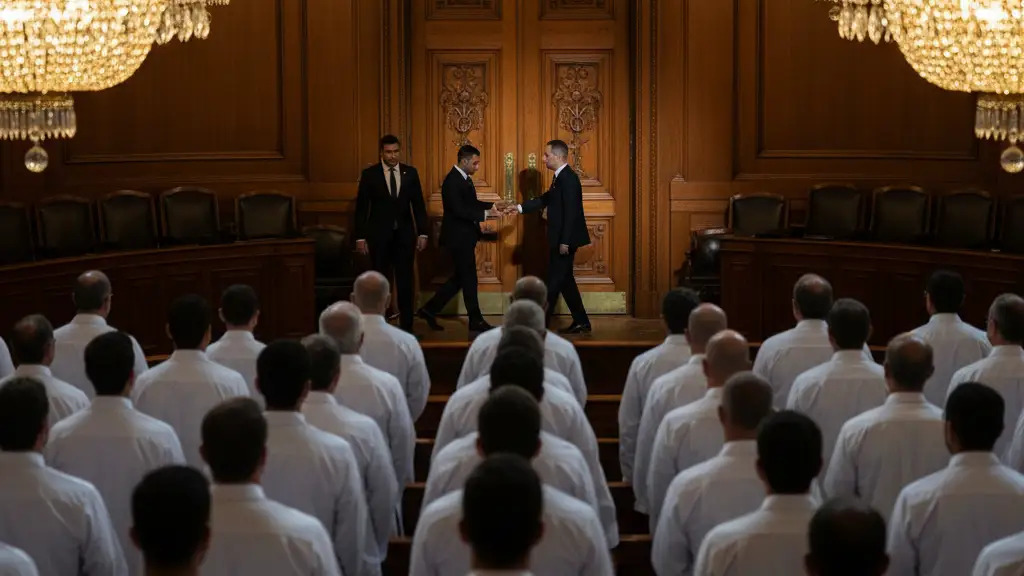
Image: Matt Weston / AI

Carla Rooney
Security personnel forcibly escorted Representative Al Green from the House chamber during President Donald Trump’s State of the Union address after the congressman displayed a sign protesting a racially charged AI-generated video.
The demonstration targeted a specific deepfake video published to Trump’s social media account earlier this month. This footage depicted former President Barack Obama and former First Lady Michelle Obama as primates.
Green stood in the aisle and hoisted a sign stating 'Black People Aren't Apes' before the Sergeant at Arms intervened. Security moved within seconds to enforce chamber protocols regarding the display of placards during a presidential address.
Black People Aren't Apes
The removal of a sitting member of Congress marked a physical escalation in the conduct of the joint session. Trump continued his delivery as security cleared the aisle, maintaining his remarks to a divided room.
Regarding the video, Trump stated he had not viewed the content in its entirety before directing an aide to publish it. He confirmed the instruction to post the media moved directly from him to a specific staff member.
The post remained active on the platform following the initial upload. Staff members responsible for social media management now face scrutiny regarding the vetting of third-party digital media.
The Congressional Black Caucus previously challenged the use of racially charged imagery in public discourse. Green’s sign aligns with these efforts to monitor digital content distributed by executive branch candidates.
A sea of white attire worn by female Democratic lawmakers defined the visual landscape of the chamber. This tradition dates back to the suffrage movement and the 1920 ratification of the 19th Amendment.
While the white garments historically represented purity of purpose, Democratic members expanded the meaning for this session. They utilized the clothing as a coordinated signal of opposition to the SAVE America Act.
This visual dissent required weeks of planning among various caucuses. Legislative aides confirmed the color choice ensured the message reached television cameras against the dark wood of the chamber.
The legislative landscape shifted further as several Democrats skipped the joint session entirely. These lawmakers cited a formal protest against the administration’s policies as the reason for their empty seats.
The House floor became a site of choreographed dissent where physical absence and symbolic garments communicated legislative grievances. This coordination highlights the friction surrounding current voting rights legislation.
The SAVE America Act remains a central point of contention between the two parties in the current congressional session. Economic and social pressures regarding this bill drive the wedge between the benches.
Green’s protest addressed the intersection of technology and racial imagery in modern political campaigning. The emergence of AI-generated deepfakes introduced new variables into the oversight responsibilities of the House.
The Sergeant at Arms maintained order by deploying immediate removal procedures as soon as the sign appeared. Such actions remain rare during the high-profile environment of a State of the Union address.
The Republican side remained seated while the white-clad Democrats stood in silent or vocal opposition. The physical layout of the room mirrored the legislative gridlock in Washington.
Trump’s defense centered on the mechanics of his social media operation rather than the specific content of the primate video. He maintained a lack of full knowledge regarding the video's contents at the time of the directive.
The incident marks the evolving nature of protest within the Capitol, moving from verbal outbursts to visual and digital-focused statements. AI-generated media has now become a direct catalyst for physical disruption on the House floor.