Orbán Seeks Re-election Amidst Claims of East-West Divide
Hungary's pivotal election pits incumbent against challenger promising Western alignment and anti-corruption drive.
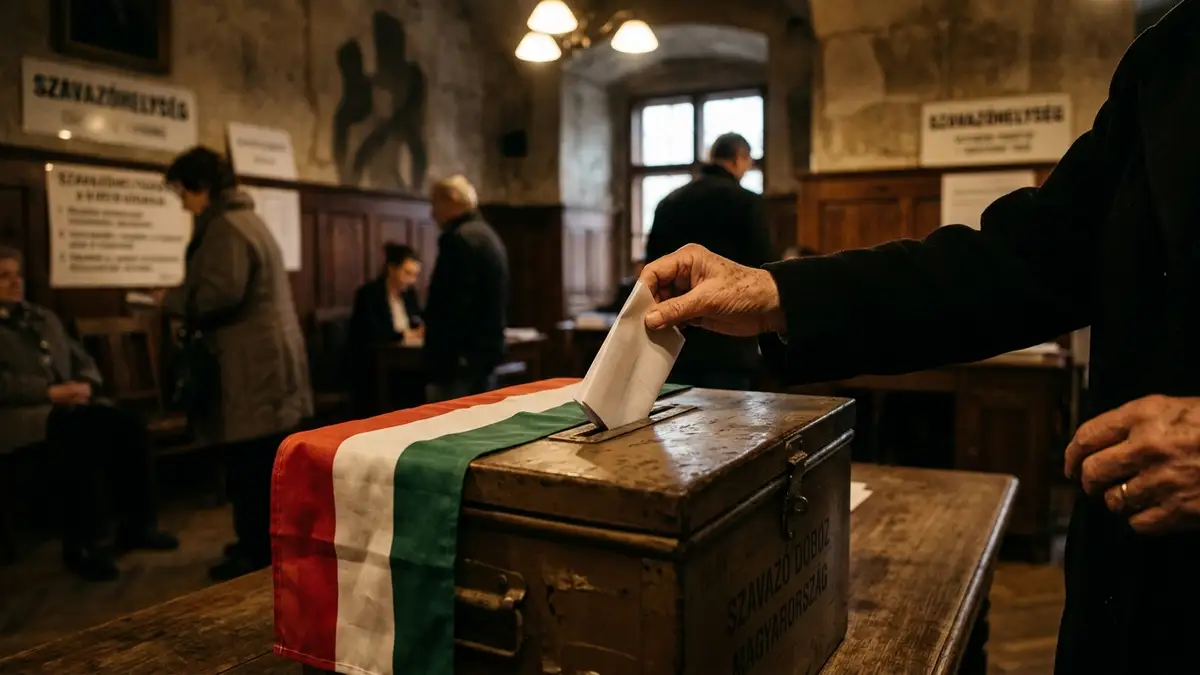
Image: Matt Weston / AI

Carla Rooney
Hungary's voters cast their ballots on Sunday, April 12, in a critical election that sees Viktor Orbán seeking another term against challenger Péter Magyar, who campaigns on a promise to reorient the nation towards the West.
His campaign pledges to restore Hungary's Western orientation, specifically strengthening its position within the European Union and NATO.
Beyond the legal debate, his platform targets domestic issues, promising a crackdown on corruption and a repair of the strained relationship with the EU.
He plans to funnel funds into the country's public services, which currently face significant challenges.
The Tisza party promises a 'change of regime,' advocating for a complete reset of relations with the European Union and an end to close ties with Russia.
This stance directly contrasts with Viktor Orbán's long-standing foreign policy, which has often leaned towards closer engagement with Moscow.
I am at your service.
Orbán previously told Russian President Vladimir Putin, 'I am at your service,' indicating a clear preference for maintaining strong bilateral relations.
Meanwhile, on the ground, Orbán frames the war in Ukraine as the country's biggest threat, positioning himself as the sole leader capable of preserving peace.
He declared, 'I am here to win,' projecting his determination to secure another term.
Orbán also claimed the opposition would 'stop at nothing to seize power,' suggesting a fierce political battle.
This strategic shift follows the historical context of Hungary's geopolitical position, often caught between major powers.
Decades ago, the nation navigated the complexities of the Cold War, a period that shaped its current political landscape and public memory.
Stakeholders across the political spectrum anticipate a contentious outcome; both sides raise concerns about the post-election environment.
Ágoston Mráz foresees a potential victory for Fidesz if the party secures key seats, indicating the tight margins at play.
Tisza voters will not accept an Orbán victory and will allege election fraud.
However, Mráz also claimed that Tisza voters will not accept an Orbán victory and will allege election fraud, pointing to deep divisions.
Balázs Orbán stated that if Fidesz wins, the opposition will not accept defeat, further highlighting the potential for unrest.
Magyar has called election fraud a very serious crime, describing the gravity of such allegations in the current climate.
The future implications of this election extend beyond Hungary's borders, potentially reshaping the dynamics within the European Union and NATO.