New Anti-Evasion Barriers Arrive at High Wycombe Station Amidst National Rollout
Taller, breakthrough-resistant gates target £400 million annual revenue loss across England's rail network.

Callum Smith
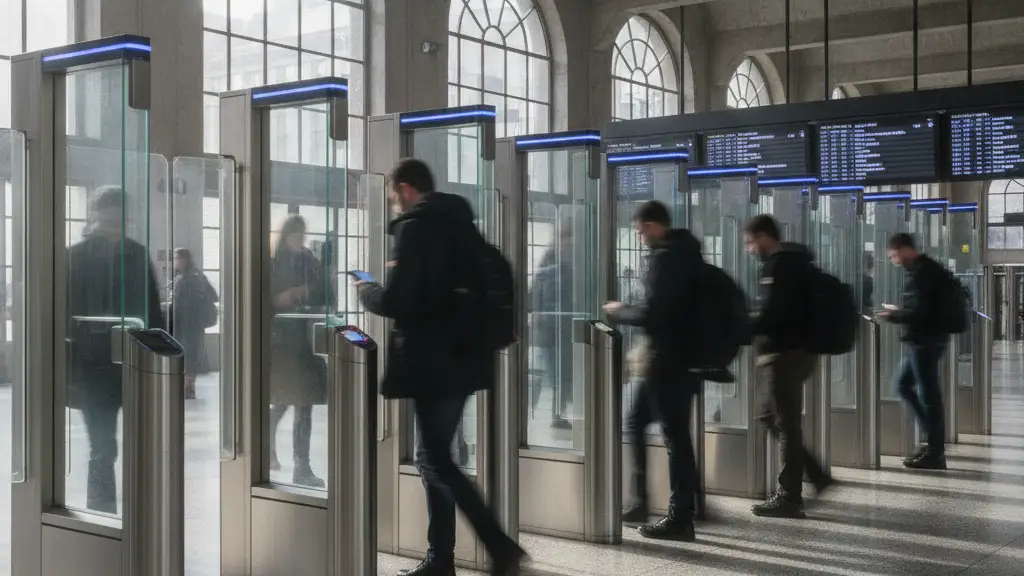
New, advanced ticket barriers have been installed at High Wycombe railway station, marking a significant step in a national initiative to combat widespread fare evasion.
The rollout of these advanced gates commences in the first half of next year, with completion projected by mid-2028.
Chiltern Railways already replaces 30-year-old gates at High Wycombe station; installation finalizes this summer.
These new ticket gates offer multiple options for passengers, allowing scans of digital tickets, insertion of paper tickets, or taps of payment cards for seamless entry.
The new barriers are also configured for contactless payment, further streamlining the ticketing process for commuters.
The initial phase of this project targets stations with documented high rates of ticket evasion.
The first train stations affected by this initiative include Liverpool Lime Street, Manchester Piccadilly, Stafford, Stevenage, Elephant and Castle, Worthing, Nuneaton, and Tamworth.
This widespread deployment escalates efforts to secure rail revenue, following historical challenges with ticketless travel.
In 2023, the standard Penalty Fare increased from £20 to £50 in England and Wales, rising to £100 if not paid within 21 days.
The new anti-jump gates specifically prevent passengers from vaulting over barriers, a common method of evasion that has long plagued the system.
Between £350 million and £400 million of annual fares revenue is lost to fraud and ticketless travel.
Beyond physical deterrence, the barriers are equipped with passenger sensors, tracking usage patterns to provide data on passenger flow and identify potential evasion hotspots.
This data collection capability offers a new layer of intelligence, allowing operators to better understand and address evasion tactics.
Meanwhile, TransPennine Express receives a share of the £33.4 million funding; the operator reports 3.5 percent of its passengers travel without a ticket.
This project forms part of the Government's wider plans to reform the rail network in anticipation of the launch of Great British Railways, aiming for a more integrated and efficient system.
At least £350 million to £400 million of annual fares revenue is lost to fraud and ticketless travel each year.
The Government anticipates this investment will help recover up to £400 million lost to fare evasion each year, bolstering the financial health of the rail network.
The Department for Transport provides the £33.4 million investment, funding the deployment of these taller gates and additional standard waist-high barriers across England.
This crackdown on fare dodgers rolls out at train stations across England, a direct response to the substantial financial drain on the industry.
The Rail Delivery Group states that between £350 million and £400 million of annual fares revenue is lost to fraud and ticketless travel.
While the barriers cannot prevent tailgaters from rushing through when open at peak times, they record such incidents and provide more data on fare dodgers.