Kurdish Forces Launch Ground Invasion into Western Iran
Thousands of fighters seize strategic heights near Mariwan as Iranian units conduct tactical retreats across the frontier
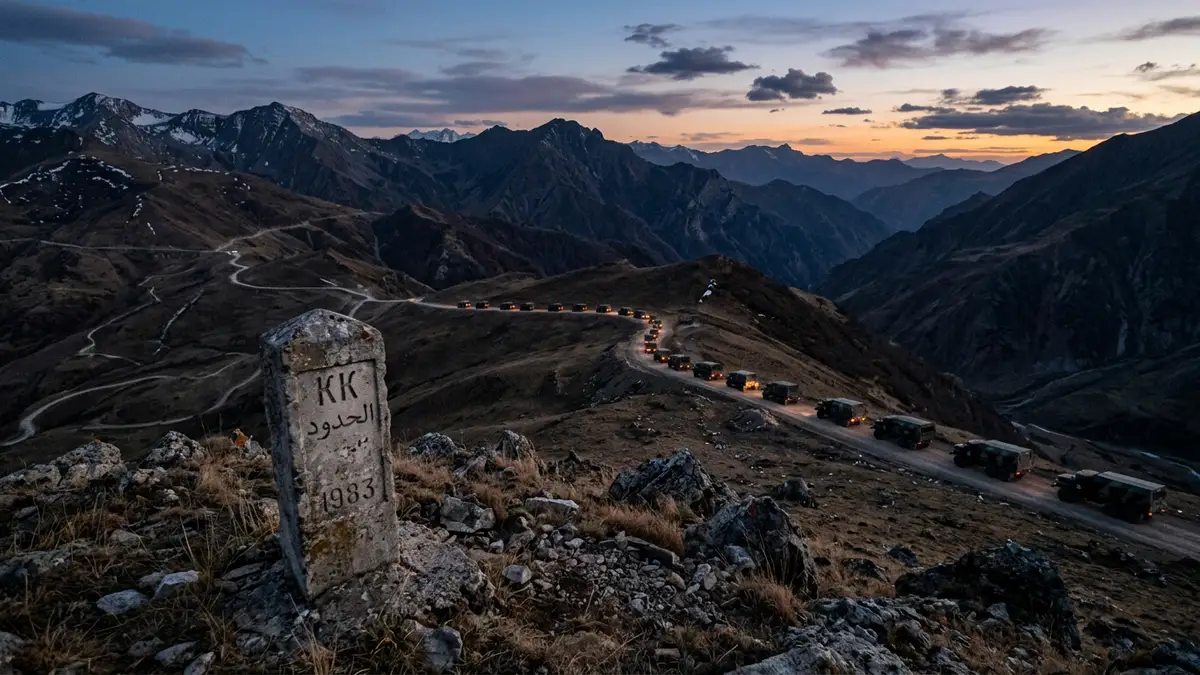
Image: Matt Weston / AI

Sarah Connor
Thousands of Iraqi Kurdish fighters crossed the international border into Iranian territory on the evening of March 2, forcing the evacuation of the strategic city of Mariwan.
Iranian border guards abandoned their fortified positions this morning as Kurdish columns surged through the rugged mountain passes of the western frontier.
The subsequent evacuation of Mariwan signals a tactical retreat by Iranian units scrambling to avoid total encirclement.
This escalation follows decades of friction between Tehran and Kurdish populations spanning the volatile Iraq-Iran border.
The 1979 Islamic Revolution and subsequent rebellions established a historical pattern of cross-border insurgency and state-led crackdowns.
Beyond these historical grievances, the current maneuver bypasses traditional diplomatic channels entirely.
Not a single Iraqi Kurd has crossed the border. This is patently false.
It relies on kinetic force to redraw influence maps across the Middle East.
Non-state actors now demonstrate the capacity to seize sovereign territory from a major regional power.
Israeli chief political analyst Amit Segal stated that Israeli officials confirm Kurdish forces have engaged Iranian units in direct combat.
These engagements mark a shift from localized skirmishes to a coordinated multi-front ground assault.
The Central Intelligence Agency has worked to arm Kurdish forces with the specific objective of sparking a popular uprising within Iran.
This strategy targets the internal stability of the Iranian state through proxy military pressure.
U.S. Secretary of War Pete Hegseth stated that the U.S. military is not arming an insurgency inside Iran.
He noted, however, that other sectors of the U.S. government could potentially be involved in the operations.
White House Press Secretary Karoline Leavitt confirmed the President held multiple calls with regional partners and Kurdish leaders regarding the U.S. base in northern Iraq.
She denied reports that the President agreed to an invasion plan.
As for any report suggesting that the president has agreed to any such plan is completely false and should not be written.
"As for any report suggesting that the president has agreed to any such plan is completely false and should not be written," Leavitt said.
The administration maintains that its communications focus on the security of existing military installations.
Economic pressure on the region intensified as border crossings, vital for trade between the Kurdistan Region and Iran, faced immediate closure.
The Iranian rial and regional markets plummeted in response to the instability of the western corridor.
Aziz Ahmad, Deputy Chief of Staff to the Prime Minister of the Kurdistan Region, disputed the reports of the crossing.
"Not a single Iraqi Kurd has crossed the border. This is patently false," Ahmad said.
Despite these denials, Kurdish officials confirmed that thousands of fighters moved into combat positions inside Iranian territory on Monday.
The movement represents a significant mobilization of the Peshmerga and affiliated paramilitary groups.
Iranian Foreign Minister Abbas Araghchi held an emergency discussion with Bafel Talabani regarding the breach.
The Iranian government has historically utilized long-range strikes against Kurdish bases in Iraq to deter such incursions.
A CPFIK official stated that the ground military movements against Iran are part of a broader synchronized effort.
The official confirmed the operations are active and ongoing across the mountainous border terrain.
The involvement of thousands of fighters suggests a high level of logistical preparation and external support.
Observers in the region monitor the potential for a wider Iranian counter-offensive involving ballistic missiles or drone swarms.
Kurdish officials confirmed the move from bordering Iraq was a deliberate advancement into the Iranian interior.
The fighters currently hold high-ground positions overlooking the primary transit routes into the city of Mariwan.