Gibraltar Border Fence Removed, Joint UK-Spain Checks Implemented
Post-Brexit agreement introduces shared border controls and new entry system for British territory.
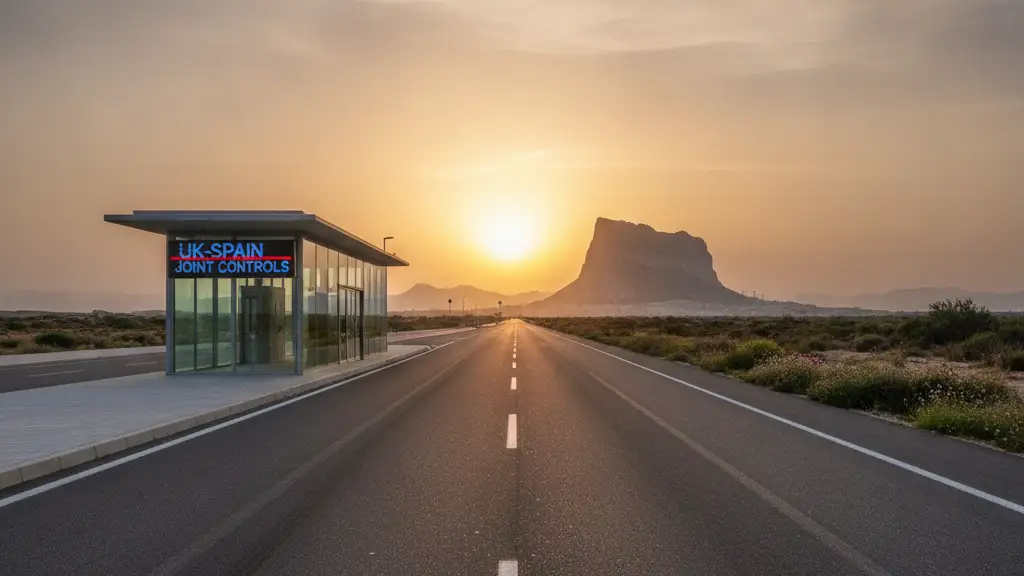
Image: Matt Weston / AI

Sarah Connor
A physical border fence separating Gibraltar and Spain has been removed, fundamentally altering the territory's post-Brexit status.
The 1713 Treaty of Utrecht ceded Gibraltar to Britain, establishing its enduring status as a British territory.
In the 2016 Brexit referendum, Gibraltar voters overwhelmingly supported continued EU membership, with 96% casting ballots to remain.
U.K. Foreign Office Minister Stephen Doughty confirmed the agreement secured Gibraltar’s long-term economic future and interests.
Beyond the legal debate, opponents claim the deal raises wider concerns about Britain’s ability to defend its overseas territories.
Critics assert the Government weakened Britain’s position on sovereignty, drawing sharp criticism from across the political spectrum.
Robert Jenrick declared, "This Government has proven itself completely incapable of defending our national interest." He added, "They fold easier than a deckchair."
Why are Brits being made to show their passport to Spaniards to enter British territory?
Jenrick questioned, "Why are Brits being made to show their passport to Spaniards to enter British territory?" He asserted Reform UK and Nigel Farage will finally prioritize the country.
Meanwhile, Andrew Rosindell maintained Gibraltar’s status as a British territory should not face compromise under any circumstances.
Rosindell claimed, "Having betrayed Britain's sovereignty over the Chagos Islands, this Government has now turned its back on Gibraltar." He called requiring Britons to face Spanish involvement when entering British territory an unacceptable concession.
Rosindell further asked, "If ministers are prepared to compromise Gibraltar today, which British Overseas Territory will they put at risk tomorrow?"
Mark Francois characterized the situation as a fitting end to Starmer's Government, concluding with a further weakening of sovereign borders.
Francois claimed that once Labour showed weakness over Chagos, other nations perceived an opportunity, leading to pressure over sovereign base areas in Cyprus and Argentina reviving its claim to the Falklands.
David Jones described the agreement as an outrageous, pathetic surrender by the British Government, calling both the current and previous Conservative administrations weak and spineless.
It is another unforced surrender and the British people will not forget it at the next general election.
Jones stated, "It is another unforced surrender and the British people will not forget it at the next general election."
Sir Gavin Williamson claimed the government seems intent on giving everything away, citing Chagos first, then Gibraltar.
Williamson stated they appear to have little care for Britain's strategic interests or the people living in these territories.
This strategic shift follows warnings from opponents that other British overseas territories could face pressure in the future.
Concerns among critics specifically point to PM-in-waiting Andy Burnham potentially seeking to revive the Chagos deal.
Argentina has already renewed its claim to the Falkland Islands, insisting the islands belong to Argentina.
Opponents warn that any perceived weakening of Britain’s position on overseas territories could encourage further challenges, creating a ripple effect across the globe.
On the ground, Britons flying into Gibraltar will now pass through the EU’s new entry/exit system (EES), which uses fingerprint and face scans and has caused long queues in some airports.