Burnham Assumes Premiership, Pledges Government Restoration
New Prime Minister outlines vision for 'No 10 North' and a decade of renewed political purpose.
Carla Rooney
Andy Burnham has officially assumed the role of Prime Minister, signalling a significant shift in the nation's leadership and a commitment to restoring public faith in government.
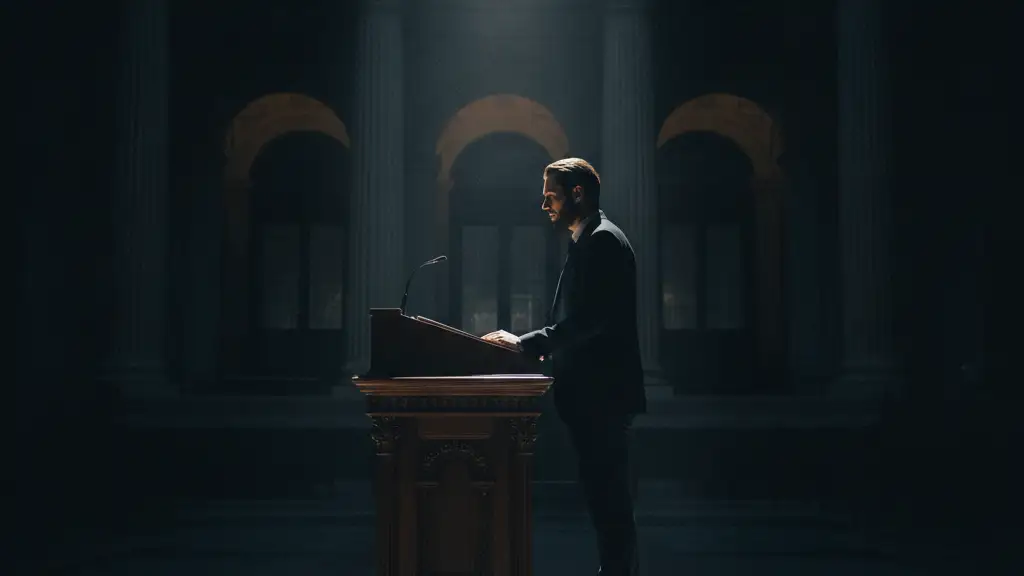
Burnham delivered his first speech outside No10 Downing Street, accompanied by his wife Marie-France van Heel, his mother, and his children. Protesters remained audible throughout the address, marking a challenging backdrop to his inauguration.
Burnham immediately declared ending rough sleeping a priority on his first day in office. He stated, "On my first day as prime minister, I’m announcing this government’s commitment to finally end long-term rough sleeping across the UK at the earliest opportunity."
He added, "We’ll get to work immediately, bringing together national and local government with the investment needed to get it done." This commitment directly challenges a persistent societal issue.
On my first day as prime minister, I’m announcing this government’s commitment to finally end long-term rough sleeping across the UK at the earliest opportunity.
The government will allocate an additional £340 million over three years to this initiative, sourced from unused parts of the housing department's budget. This substantial investment defines the new administration's approach.
This funding pays for 1,200 new homes and supports 3,000 people over five years. It builds on the previous government's £3.5 billion allocation for homelessness strategy, demonstrating continuity with increased focus.
Burnham's pledge replicates the success of the 'Everyone In' policy implemented during the Covid pandemic. That program housed thousands, offering a blueprint for the current strategy.
During his first five years as mayor, rough sleeping in Manchester dropped by two-thirds. The Greater Manchester Combined Authority plans to increase bed spaces through A Bed Every Night from 550 to over 600 by April 2025.
Meanwhile, the London Assembly Housing Committee reported a 63% rise in rough sleeping in London since 2015/16. This figure indicates a broader national challenge extending beyond regional successes.
Beyond social policy, Burnham appointed John Healey as Chancellor, while Shabana Mahmood remains Home Secretary. These key appointments solidify his initial cabinet structure.
He also pledged to adhere to Rachel Reeves's "fiscal rules," which impose limits on debt and borrowing. This commitment signals a cautious approach to economic management despite ambitious spending plans.
Burnham stated Britain needs to regain stability, noting he is the sixth prime minister in a decade and the seventh since 2016. This rapid turnover defines a period of significant political volatility.
He promised to set out a ten-year plan later this year, calling it "a circuit breaker for Britain, bringing forward the biggest changes in the last 40 years – a new political model and a new economic model." This ambitious vision targets fundamental structural reforms.
a circuit breaker for Britain, bringing forward the biggest changes in the last 40 years – a new political model and a new economic model.
Burnham argued that Britain "took some wrong turns" in the 1980s, with political power centralized, economic power privatized, and large parts of the country deindustrialized. He directly challenges the legacy of past economic policies.
He plans to change the education system to help young people into work and provide more mental health support. Additionally, he committed to building more council homes, addressing critical social infrastructure needs.
Burnham suggested potential income tax cuts for lower earners, possibly by raising the tax-free personal allowance. He did not rule out reinstating the 50p top rate of tax to fund such measures, indicating a potential redistribution of the tax burden.
He will announce measures to help with the cost of living starting tomorrow, promising to provide "some breathing space now." He also committed to explaining how these initiatives will be funded, addressing immediate economic pressures.
Burnham visited the homelessness charity The Passage in Victoria, London, underscoring his immediate focus. This public appearance reinforced his commitment to tackling rough sleeping.
Rob Williams, a political observer, noted that Burnham is "betting that he can run Great Britain the way he ran Greater Manchester." This observation draws a direct parallel between his past and present roles.
Williams also highlighted that Burnham's promise to end rough sleeping in Greater Manchester by 2020 was not achieved. Numbers have risen in the past four years to three-quarters of the 2017 level, presenting a challenge to his current pledge.
Burnham's claim that his government will build a new economy with essential services under stronger public control to make them affordable signals a significant shift. This move redefines the relationship between the state and public services.
He also plans to reindustrialize Britain using public procurement to back British industry. This strategy moves away from an era of centralisation, privatisation, and de-industrialisation, revitalizing domestic manufacturing.
Burnham will urge the country to be honest about the challenges it faces and call for "reflection and resolution." This appeal seeks national unity and a shared understanding of the path forward.
He spoke with Donald Trump, Volodymyr Zelenskyy, and Ursula von der Leyen, indicating early engagement on the international stage. These calls establish his presence among global leaders.
Ed Miliband has been appointed as foreign secretary, a key role in the new administration. Burnham plans to split his time between Downing Street and the North West, with an intention to work from a new Manchester outpost.
He promised positivity and hope during his tenure, stating, "Let us make this the moment when Britain starts to believe again, the moment we bring back hope." This closing sentiment aims to inspire public confidence.