Bayeux Tapestry Makes Historic London Debut, Displayed Flat for First Time
Ancient artefact's arrival at the British Museum follows years of Anglo-French negotiations, sparking both excitement and controversy.
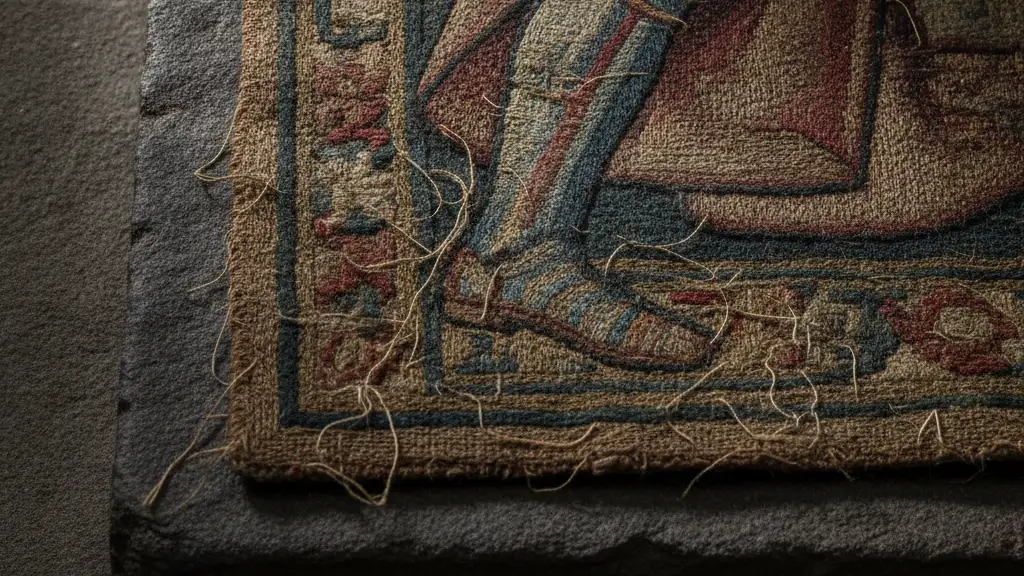
Image: Eddie Pollard / AI

Callum Smith
The Bayeux Tapestry has arrived in London, set for its unprecedented flat display at the British Museum this September.
Five applicants vied for every initial ticket released, igniting considerable public interest in this cultural exchange.
The loan agreement itself necessitated years of intricate negotiations between the United Kingdom and France, focusing intensely on transport and display conditions.
Beyond the legal debate, a reciprocal arrangement sends items from the British Museum's own collection, including the iconic Sutton Hoo Helmet, to Normandy.
Preparations for the exhibition included stringent precautions; the museum banned phones and pens and mandated protective shoe covers for all staff handling the artifact.
The initial proposal for this landmark loan emerged in 2018, put forth by then-Prime Minister Theresa May and French President Emmanuel Macron.
Britain funded the tapestry's transfer, a logistical undertaking that required over a year of meticulous planning and extensive technical studies.
However, the exhibition has not proceeded without controversy, drawing criticism from various quarters, including the late artist David Hockney.
The Bayeux Tapestry was too precious to endure transport.
Hockney publicly stated the Bayeux Tapestry was too precious to endure transport, voicing strong opposition to its movement.
Many in France echoed these concerns, claiming that moving the 11th-century tapestry presented an unacceptable risk.
French cultural figures also opposed the loan, asserting that relocating the ancient textile was inherently too risky.
Further criticism targeted the £33 ticket price, which visitors must pay to view the historic exhibit.
Despite the objections, the arrival of the Bayeux Tapestry marks a significant step in mending post-Brexit relations between Britain and France.
Labour MP Lisa Nandy confirmed the government actively integrates cultural exchange more deliberately into its foreign policy strategy.
The government actively integrates cultural exchange more deliberately into its foreign policy strategy.
This cultural diplomacy initiative reflects a broader shift, where historical artifacts become instruments in contemporary international relations.
The display offers a rare opportunity for a new generation to engage directly with a pivotal piece of European history, previously only accessible in Bayeux.
Its flat presentation promises an unparalleled viewing experience, allowing for a detailed examination of its intricate narrative and craftsmanship.
The long-term implications could see increased cultural collaboration, setting a precedent for future exchanges of significant historical treasures across borders.