Argentina Protests Royal Navy Presence Near Falklands After World Cup Victory
Diplomatic row ignites as Buenos Aires condemns 'military incursion' by HMS Medway, reigniting a decades-old territorial dispute.
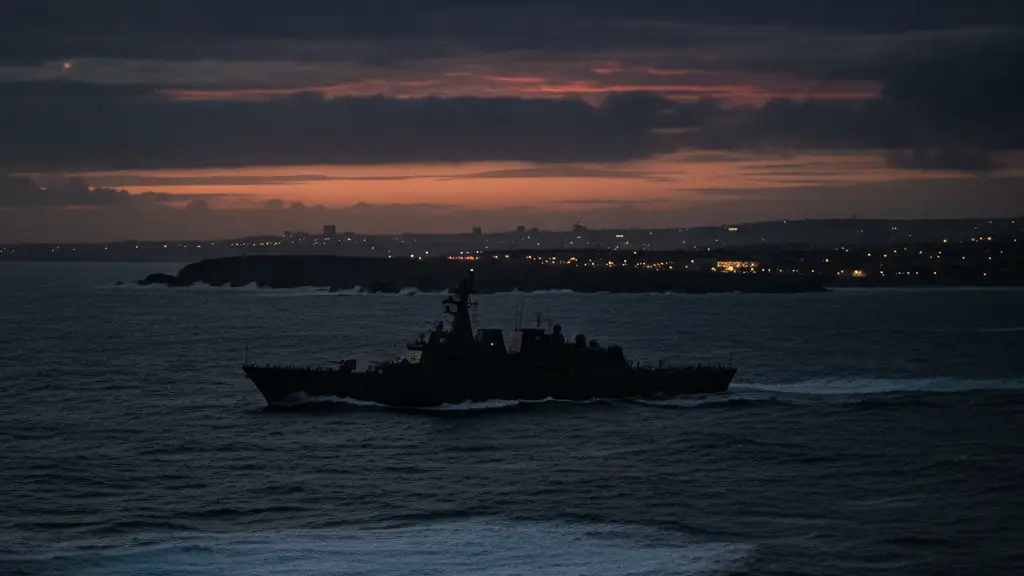
Image: Eddie Pollard / AI

Carla Rooney
Argentina has lodged a formal protest following a Royal Navy warship's passage near the Falkland Islands, escalating a long-standing territorial dispute with the United Kingdom.
The accusation surfaced after Argentina's recent World Cup semi-final victory against England, a match where players prominently displayed a banner reading 'Las Malvinas son Argentinas'. This public demonstration highlighted the enduring national sentiment regarding the islands.
HMS Medway, a Royal Navy patrol vessel, operates in the Falkland Islands, a territory over which Argentina and the United Kingdom engaged in war in 1982.
The Argentine Foreign Ministry now claims HMS Medway executed an 'unconsulted and illegal' passage through Argentine territorial waters earlier this month.
Pablo Quirno, an Argentine official, stated the Royal Navy committed a 'military incursion' into Argentine waters. He asserted the UK 'deepens tensions' in the South Atlantic.
The UK deepens tensions in the South Atlantic.
Quirno also claimed this 'incursion' represented the latest in a series of similar provocations. He indicated a pattern of British actions.
The Argentine foreign ministry further claimed the warship failed to properly notify the nation of its movement. They described the action as a 'military incursion' into areas under Argentina's jurisdiction.
The ministry also stated the Navy 'hindered Argentina's efforts to move towards a peaceful and negotiated solution to the dispute'.
Historically, the 1982 conflict claimed the lives of 649 Argentines, 255 British personnel, and three islanders. This marked a brutal chapter in the dispute.
The conflict's legacy continues to shape diplomatic relations between the two nations. The islands remain a potent symbol of national pride for Argentina.
Beyond the legal debate, Pablo Quirno claimed the people living on the islands had been 'artificially implanted'. He dismissed a referendum on British sovereignty as illegitimate.
The people living on the islands had been artificially implanted.
This stance directly challenges the self-determination of the islanders. They overwhelmingly voted to remain a British Overseas Territory in a 2013 referendum.
Meanwhile, on the ground, Victoria Villarruel, Argentina's Vice President, called England 'invaders' and 'usurping pirates'. She asserted the archipelago was Argentine after the semi-final.
President Javier Milei maintained the Falklands 'were, are and will always be Argentine'. He also stated the World Cup victory was just 'a football match'.
These statements from high-ranking officials reflect the political and public pressure surrounding the Falklands issue within Argentina.
The diplomatic landscape surrounding the Falklands has seen other developments. Argentina has previously condemned meetings between Chile and the UK, claiming such interactions 'weakened' its position.
A leaked Pentagon memo suggests the US might review its position on British sovereignty over Britain's failure to contribute to the Iran war. This could potentially alter the international context.
This potential shift in US policy introduces a new layer of complexity to the long-standing dispute. It impacts the geopolitical balance in the South Atlantic.
Beyond the Falklands, Argentina also maintains a continuing border dispute with Chile over an ice field in the Patagonian mountains. This highlights broader regional tensions.
The current protest underscores the persistent nature of the territorial claims. It ensures the Falklands dispute remains a flashpoint in international relations.